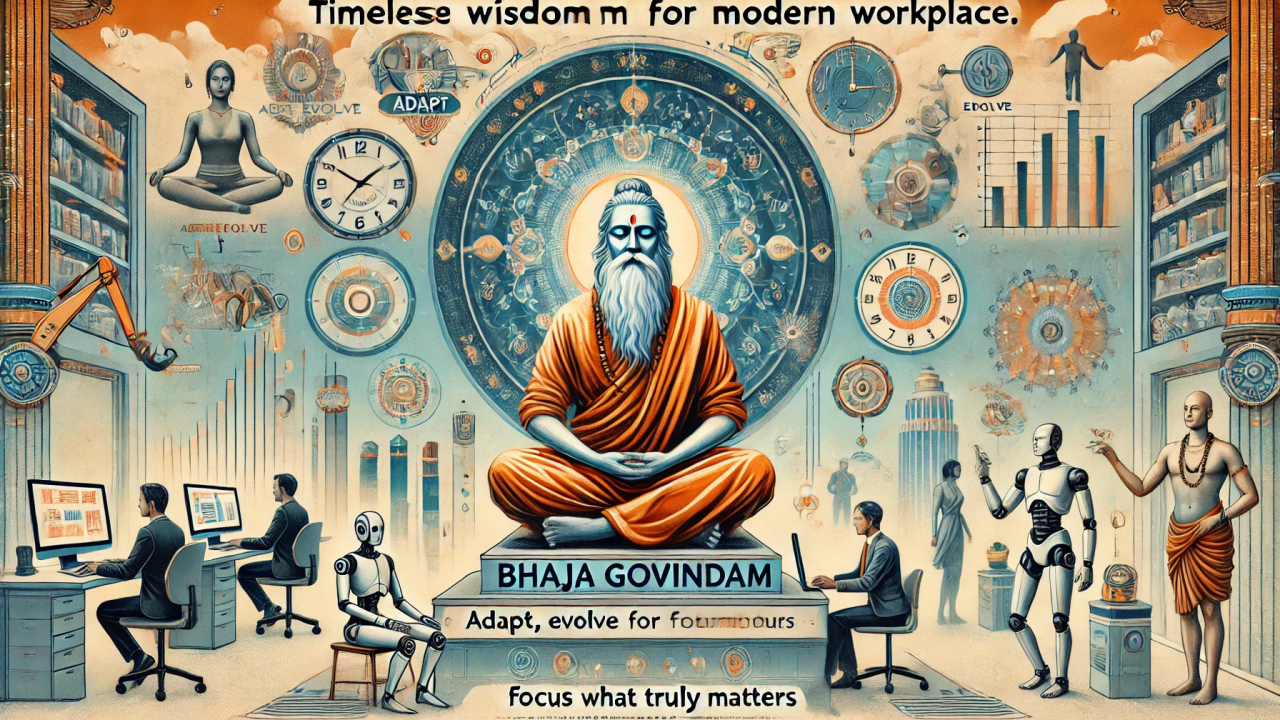
Introduction: Bhaja Govindam – A Timeless Masterpiece by Adi Shankaracharya
"Bhaja Govindam," composed by Adi Shankaracharya, is more than a spiritual hymn—it is a manual for navigating life's distractions, illusions, and impermanence. Often referred to as the "Moha Mudgara" or "Hammer of Delusion," this work urges individuals to shift their focus from transient pursuits toward enduring values. Its verses, written in simple yet profound language, have an uncanny relevance to the complexities of today’s fast-paced professional environments.
In the corporate world, where ambition often eclipses mindfulness, and short-term gains are prioritized over long-term stability, the teachings of Bhaja Govindam provide a grounding perspective. It addresses core issues such as the allure of superficial success, the inevitability of change, the importance of ethical decision-making, and the need for balance in work and life. These teachings, when applied, can enhance focus, foster resilience, and guide professionals toward purposeful careers.
As organizations navigate disruptions like AI-driven automation, economic volatility, and cultural shifts, the timeless wisdom of Bhaja Govindam serves as a beacon. It reminds us to evaluate priorities, embrace adaptability, and uphold values, offering a roadmap to thrive amidst workplace challenges.
Bhaja Govindam: Workplace Lessons Rooted in Timeless Wisdom
1. The Allure of Shiny Objects: A Trap for the Unfocused
Verse: Nārīstanabhara-nābhīdeśaṁ, dṛṣṭvā māgāmōhāvēśam;
Ētanmāṁsa-vasādi-vikāraṁ, manasi vicintaya vāraṁ vāram
(Do not be deluded by the beauty of a woman; it is but a modification of flesh and fat. Reflect on this truth repeatedly in your mind.)
Metaphor: This verse warns against being swayed by superficial attractions, akin to the workplace’s obsession with "shiny objects." Many companies rush to adopt flashy tools or projects without evaluating their true relevance.
Sublime Examples:
- Google Glass: Hailed as a revolutionary product, it failed due to its impracticality and lack of real-world value, despite its hype.
- Blockchain Hype: Organizations jumped into blockchain integration without understanding its application, leading to failed projects.
Takeaway: True innovation lies in solving real problems, not in chasing trends. Evaluate tools for long-term value rather than succumbing to fleeting appeal.
2. The Rise of AI and Automation: Impermanence of Manual Labor
Verse: Kā tē kānta dhana gata cintā, vāri nidhīṁṣya galita śiṣṭā
(Why worry about wealth and possessions? At the end, they will not come with you.)
Metaphor: In the age of AI and automation, routine manual labor and repetitive tasks are being phased out. Skills or jobs not aligned with the future are as impermanent as material wealth.
Sublime Examples:
- Generative AI: Tools like ChatGPT and DALL-E are automating creative tasks, challenging traditional roles in writing, design, and software development.
- Amazon's Robotic Warehouses: Automation has drastically reduced reliance on human labor for repetitive warehouse tasks.
Takeaway: Reskill and evolve with workplace demands. Embrace AI as a collaborator rather than a competitor.
3. The Disposable Employee: Harsh Realities of Corporate Life
Verse: Yāvat-pavano nivasati dēhē, tāvat-pricchati kuśalaṁ gēhē;
gata-vati vāyau dēhāpāyē, bhāryā bibhyati tasminkāyē
(As long as breath resides in the body, people inquire about your welfare. When the breath leaves, even the wife fears the body.)
Metaphor: This verse mirrors how employees are treated: celebrated when productive, discarded when redundant.
Sublime Examples:
- 2023 Tech Layoffs: Companies like Meta, Google, and Amazon laid off tens of thousands despite record profits, showing how quickly roles can become dispensable.
- Ageism in Tech: Older employees often face redundancy when managers prefer hiring younger talent familiar with newer technologies.
Takeaway: Build independence and resilience. Your value lies beyond your current role or organization.
4. Over-Engineering: Losing Sight of the Goal
Verse: Nahi nahi rakshati dukrinkarane (Grammar rules will not save you.)
Metaphor: This verse emphasizes that overly focusing on technicalities, like grammar in language, distracts from the essence of meaningful communication. In the workplace, it reflects how over-engineering leads to unnecessarily complex solutions that fail to meet core objectives, ultimately alienating users or overburdening teams.
Sublime Examples:
Google Wave: Google Wave was a highly ambitious tool designed to revolutionize communication and collaboration. However, it was over-engineered with excessive features that confused users, leading to its failure despite its potential.
Tesla Cybertruck Windows Incident: The highly publicized shatterproof windows of the Tesla Cybertruck shattered during a live demo, highlighting how focusing on gimmicky features can detract from the core product’s functionality and perception.
Zoom’s Rise During COVID-19: While competitors like Microsoft Teams and Cisco WebEx offered feature-rich platforms, Zoom thrived by providing simplicity and reliability for video calls—a core need during remote work transitions.
Takeaway: Simplicity and clarity are key to successful design and innovation. Avoid the temptation to overcomplicate products or processes. Instead, focus on solving the most critical problems effectively, ensuring user satisfaction and practical utility.
5. Time is the Ultimate Equalizer
Verse: Kālaḥ kṛīḍati gachchatyāyuhu
(Time plays, and life ebbs away.)
Metaphor: This verse underscores the transient nature of success. Dominant companies or skill sets fade if they fail to adapt.
Sublime Examples:
- Nokia and BlackBerry: These giants of the mobile industry became irrelevant because they ignored the smartphone revolution.
- Legacy Systems: Many organizations still rely on outdated COBOL systems, struggling to modernize.
Takeaway: Continuously evolve. Resting on past successes leads to irrelevance.
6. Ethical Behavior Over Short-Term Gains
Verse: Artham anartham bhavaya nityam, nāsti tataḥ sukha-lēśaḥ satyam
(Wealth is meaningless and brings no real happiness; this is the truth.)
Metaphor: Unethical workplace practices may lead to short-term gains but often result in long-term collapse.
Sublime Examples:
- Enron Scandal: A focus on profit through unethical practices led to its catastrophic collapse.
- Cambridge Analytica: The misuse of user data for political purposes resulted in global outrage and the company’s shutdown.
Takeaway: Build success on integrity. Wealth gained unethically is fleeting and harmful.
7. Work-Life Balance: The True Wealth
Verse: Kūrēṣvanusajjita mūḍamatēḥ, saṁgati tēṣaṁ na karōti yōgaṁ
(Do not get attached to material wealth and comforts; they hinder your spiritual progress.)
Metaphor: Overworking in pursuit of material goals often comes at the cost of health, relationships, and personal growth.
Sublime Example:
- Tech Burnout Epidemic: Employees working excessive hours often face physical and mental exhaustion, resulting in long-term consequences.
Takeaway: Prioritize health and relationships. A balanced life is the foundation of true success.
8. Overcoming Distractions and Immaturity
Verse: Bālastāvatkrīḍāsaktaḥ, taruṇastāvat taruṇīsaktaḥ;
vṛddhastāvachintāsaktaḥ, parame brahmaṇi ko’pi na saktaḥ
(In childhood, one is attached to play; in youth, one is attached to women; in old age, one is attached to worries. No one is truly attached to the Supreme.)
Metaphor: This verse reflects how immaturity and distractions prevent individuals from focusing on meaningful goals. In the workplace, it resonates with employees who remain engrossed in trivial pursuits rather than contributing effectively to larger organizational objectives.
Workplace Scenario:
- Early-career distractions: New employees often get caught up in office politics, gossip, or overambitious networking, neglecting their core responsibilities.
- Leadership immaturity: Leaders who focus excessively on external validation—like promotions or titles—may fail to inspire and guide their teams effectively.
Sublime Example:
- Companies like Theranos failed because their leaders prioritized fame over building a reliable product, leading to distractions from ethical business practices.
Takeaway: Recognize distractions and channel your energy into purposeful work that aligns with organizational and personal growth.
9. Cohesive Workplaces Through Positive Associations
Verse: Satsaṁgatvē nissaṁgatvaṁ, nissaṁgatvē nirmōhatvam;
nirmōhatvē niścalatattvaṁ, niścalatattvē jīvanmuktiḥ
(From good company arises detachment; from detachment arises freedom from delusion; from freedom from delusion arises unwavering truth; from unwavering truth arises liberation.)
Metaphor: This verse emphasizes the transformative power of positive associations. A cohesive and supportive workplace fosters clarity, trust, and mutual growth, leading to collective success.
Workplace Scenario:
- Teams thrive when they are built on trust, mentorship, and mutual respect. Toxic workplaces, on the other hand, breed delusion, conflict, and inefficiency.
- Organizations with strong mentorship programs and collaborative cultures produce more innovative and resilient teams.
Sublime Example:
- Google’s Team Research Project: Google’s Project Aristotle found that psychological safety—ensuring individuals feel safe to express ideas and take risks—was the foundation of successful teams.
- Companies like Patagonia have created cohesive work environments that prioritize meaningful relationships, resulting in loyalty and long-term growth.
Takeaway: Surround yourself with colleagues who inspire and challenge you positively. Good associations build clarity and purpose, both individually and collectively.
10. Superficial Appearances vs. True Values
Verse: jaṭilō muṇḍī luñChitakēśaḥ, kāṣāyaṁbarabahukṛitavēṣaḥ | paśyanapi ca na paśyati mūḍhō, hyudaranimittaṁ bahukṛitavēṣaḥ || (With matted hair, shaved heads, or wearing saffron robes, some take on various appearances. Yet, despite seeing, the fool does not perceive, as all this is done for mere stomach's sake.)
Metaphor: This verse criticizes those who focus solely on outward appearances without true substance or purpose. In the workplace, this reflects employees or leaders who engage in performative actions—creating the illusion of productivity or expertise—while lacking true commitment or capability.
Workplace Example:
Performative Leadership: Managers who focus on optics, like grand presentations, while neglecting real team development or results.
Hollow Certifications: Employees who collect certifications without applying their knowledge meaningfully in projects.
Takeaway: Value authenticity and results over superficial appearances. True leadership and productivity come from genuine effort, not showmanship.
11. Relationships and Attachments: A Reality Check
Verse: kā tē kāntā kastē putraḥ, saṁsarōyamativa vicitraḥ | kasya tvaṁ kaḥ kuta āyātaḥ, tattvaṁ cintaya tadiha bhrātaḥ || (Who is your wife? Who is your son? The samsara (world) is truly strange. Whose are you? Where have you come from? Reflect on these truths, O brother.)
Metaphor: This verse reflects on the ephemeral nature of relationships and worldly attachments, urging individuals to question their ultimate purpose. In the workplace, it is a reminder to focus on long-term, meaningful contributions rather than transient, superficial gains.
Workplace Example:
Temporary Alliances: Teams or partnerships formed for short-term gains often lack trust and fail to achieve sustainable success.
Job-Hopping Without Purpose: Professionals switching jobs frequently for marginal salary increases without considering long-term career goals.
Takeaway: Foster meaningful relationships and aim for purposeful contributions rather than being consumed by fleeting rewards or attachments.
12. Impermanence of Life and Wealth
Verse: kaṅgaḷitaṁ palitaṁ muṇḍaṁ, daśanavihīnaṁ jātaṁ tuṇḍam | vṛiddhō yāti gṛihītvā daṇḍaṁ, tadapi na muñcatyāśāpiṇḍam || (Hair is gone, teeth have fallen out, and the body has aged, yet desires do not leave.)
Metaphor: This verse highlights the folly of clinging to desires despite the impermanence of life and material wealth. In the workplace, it reflects the obsession with profits or promotions at the expense of well-being and integrity.
Workplace Example:
Burnout Culture: Professionals working tirelessly for promotions, ignoring health and personal life.
Unethical Practices: Companies cutting corners to maximize profits without considering long-term sustainability.
Takeaway: Recognize the impermanence of material rewards. Focus on sustainable growth and well-being for lasting success.
References
1. Bhaja Govindam Full Text with Meaning
This source provides the complete text of Bhaja Govindam with detailed explanations of each verse, helping you understand its essence.
2. The Spiritual Essence of Bhaja Govindam
An analysis of Bhaja Govindam’s verses and their connection to spiritual and practical life.