01
conflict with boss
Career
Job loss /conflict with boss
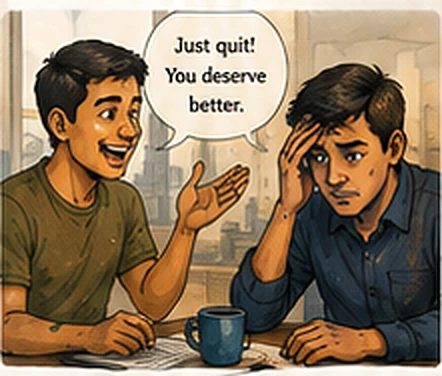
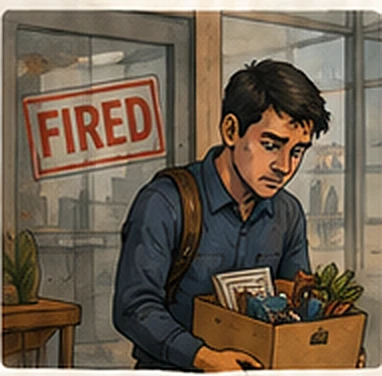

The advice was momentary. The career consequence was not.
He modelled the confrontation. Nobody models the aftermath, because the aftermath is boring and has no dialogue in it.

யானை தன் தலையில் தானே மண்ணை வாரிப் போட்டுக்கொள்ளும்.
The elephant scoops up the mud and throws it on its own head.
The elephant in the proverb is not being punished. Nobody is throwing mud at it. It reaches down with its own trunk, gathers the dirt, lifts it over its head, and lets go. Every part of that motion is voluntary. Every part of it is also, in the elephant's defence, completely reasonable at the time — mud cools the skin and keeps the flies off.
That is the uncomfortable precision of the image. The damage is not done to you. It is done by you, using instructions you accepted from someone standing well outside the splash radius.
The easy version of this article is a complaint about bad friends and jealous colleagues. That version is satisfying and mostly wrong. The people who give you ruinous advice are usually warm, confident, genuinely fond of you — and structurally unable to give you good counsel.
It isn't malice.
It's mechanism.
Advice is generated by one person and executed by another. Nowhere in that pipeline does the cost travel back up.
Accountants have a discipline the rest of us lack. Every transaction has two sides, and the books only balance when both are written down. Advice is the one transaction we habitually record on one side only — the giving — and never on the other. So write the other side down.
| Line item | Their column | Your column |
|---|---|---|
| Time invested | Ninety seconds, over coffee | Months, sometimes years |
| Information used | What you told them in one sitting | Everything, including what you couldn't say |
| If it works | Credit. A story they retell. | The outcome, plus a debt of gratitude |
| If it fails | Nothing. Possibly sympathy. | The full loss, uninsured |
| Reversal cost | They can change their mind for free | You cannot unsend the email |
| Exit | Immediate and total | None available |
Look at the shaded row. That is the whole article. A payoff structure where one party captures the upside and none of the downside is not friendship — it is a free option, and options are valuable precisely because the holder cannot lose. Nassim Taleb built a book on this asymmetry and called it skin in the game. Economists have a duller name for the same shape: the principal–agent problem, which is what happens whenever the person deciding is not the person paying.
Your friend at the wedding, telling you to stand your ground, is an agent with no capital at risk. He is not a villain. He is simply, in the technical sense, unaccountable.
The domains look unrelated. The failure is identical every time: a statement that is true in general gets applied to a situation that is specific in every way that matters.
The advice was momentary. The career consequence was not.
He modelled the confrontation. Nobody models the aftermath, because the aftermath is boring and has no dialogue in it.
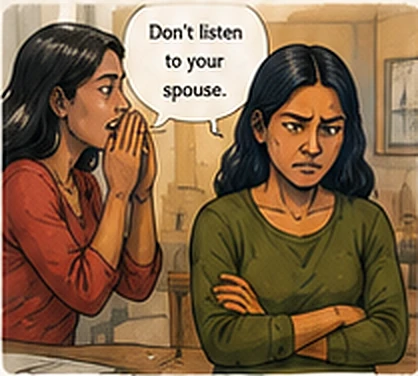


The adviser goes home. The marriage remains in the room.
A marriage is a two-person problem. The moment an adviser is standing behind you it's a three-person problem — and one of them is an audience. Nobody argues the same way with an audience.


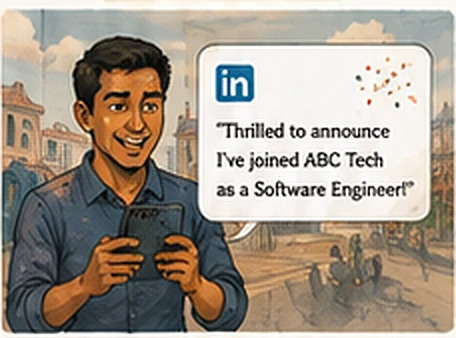
One harmless exception repeated often enough becomes a life-changing pattern.
The advice wasn't false. It was wrongly scoped — a claim about a single instance, deployed inside a repeated game. Every individual cigarette is also harmless.
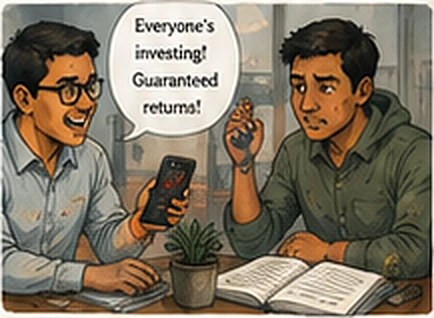
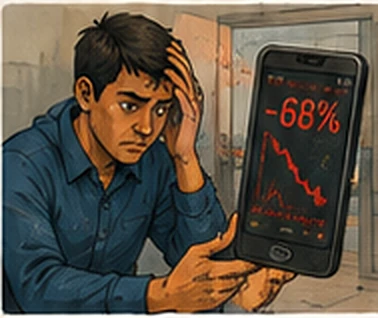

Their confidence was free. Your loss settled in real money.
He was already in. Your entry validated his position and cost him nothing. He collects the social return — being early, being right, being the one who told you — on a completely different settlement schedule from your financial one.
Four rooms.
One invoice.
Always in your name.
Not occasionally bad. Systematically — biased in a predictable direction. Which is the good news, because predictable biases can be corrected for.





Psychologists call this construal level: the further you are from a decision, the more abstractly you represent it. From a distance you see values and principles — dignity, courage, standards. Up close, you see a text box, a cursor, and a person who signs your payslip.
This is why advice arrives as a slogan and must be executed as a sentence. Nobody ever advised you to write "You don't know how to treat people" at 11:47pm. They advised you to have self-respect. You did the translation, alone, at ground level — and the translation is where the entire risk lives.
Ask anyone offering a principle to convert it into the first concrete action. Watch how fast the confidence drains.
This one is measurable and not a metaphor. Across a body of self–other decision-making research, people choosing for others show reliably less loss aversion than when choosing for themselves. The loss isn't theirs, so it doesn't register as a loss; it registers as an abstraction, and abstractions are cheap to spend.
The practical form: your friend genuinely would not quit his own job this week. He is not lying when he tells you to quit yours. He is running the calculation on a machine where the loss variable is set to zero.
Abraham Wald's correction still applies: the returning bombers showed bullet holes in the wings, so the armour belonged on the engines — because the planes hit there never came back to be measured.
Everyone who confidently tells you to quit and start something did, in fact, quit and start something, and it worked. The ones for whom it didn't are not at the party. They are not posting. They are quietly employed somewhere and would rather not discuss it. Your entire advisory sample is drawn from the wing holes.
The correction is one question, and almost nobody asks it: "Who else did this, and what happened to them?"
Watch the "meanwhile" panels above. The adviser gets promoted. The friend lands the job. The finance guy buys the car and posts the caption. This is not karmic injustice — it's the payoff table working exactly as designed.
Giving advice pays immediately, in status, in the feeling of being consulted, in the pleasure of being the person who knows. That payment clears the moment the sentence ends. Your outcome settles months later, on a different exchange, in a currency they don't hold.
Nobody has ever had to write down an advice loss. There is no ledger for it. Which is precisely why the advice keeps coming.
You gave them ninety seconds of context. You left out the part where you've already been warned once, the part about the loan, the part about what your spouse said in the car last month, and the part you haven't admitted to yourself.
They then answered — fluently, confidently — using their own life as the missing data. Every gap in your telling got filled with their situation, their risk tolerance, their finances, their marriage, their boss.
The advice you received was excellent. It was excellent for them.
The dangerous property of this pattern isn't that it costs you once. It's that the cost creates the conditions for the next round. You act on borrowed judgement, it goes badly, your confidence in your own judgement drops — and a person with low confidence in their own judgement does what? Asks around.
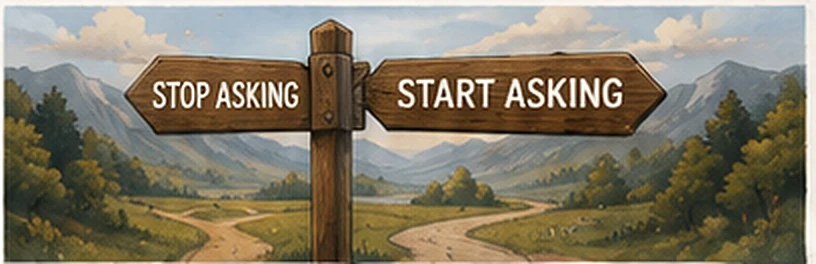
The tempting over-correction is to stop asking anyone anything and call it independence. That fails faster and costs more, because the alternative to borrowed judgement isn't clear judgement — it's unexamined judgement, which is just advice from the least sceptical person you know.
The fix is smaller and duller. Keep the people. Change what you extract from them.
"What should I do?"
"What am I not seeing?"
"Would you do it?"
"Have you done it? What did it cost?"
"Am I right to be angry?"
"What's the strongest version of his side?"
"Is this a good investment?"
"What has to be true for this to work?"
"Should I send this?"
"What does this look like in a year?"
The left column asks for a verdict. The right column asks for inputs — the only thing an outsider is actually qualified to supply, because inputs don't require knowing your constraints. Someone with no skin in your game can be a superb source of information. They just can't be the judge.
One more move, the cheapest insurance available: make the advice specific before you accept it. "Stand your ground" becomes "draft the exact sentence." Watch what happens. Most confident advice dissolves on contact with a first draft — and it dissolves in their hands rather than yours.
Hold one specific piece of advice in mind — real, recent, still unacted-upon. Tick only what's true.


The score measures how much of your decision they are structurally able to carry, not how much you like them. Most people you love will score two.
It could have picked anything. It picked the largest animal in the forest — something strong, deliberate, long-memoried, and entirely capable of not doing this.
That's the sting. The proverb isn't about weakness. It's about a powerful creature performing a small self-defeating act so routinely that it became the standard image for it. You are not being ruined by forces beyond your control. You are, most weeks, quite competent. And then a sentence arrives from someone standing safely on the bank, and you reach down, and you lift.
யானை தன் தலையில் தானே மண்ணை வாரிப் போட்டுக்கொள்ளும்.
The elephant throws mud on its own head.
अपने पैर पर कुल्हाड़ी मारना।
To strike the axe on your own foot.
Two traditions, two animals' worth of distance apart, arriving at the same observation: the injury that lasts is usually the one you administer yourself, with borrowed conviction, in a moment that felt like courage.
None of this argues for isolation. Listen to everyone — genuinely, generously, more than you currently do. Advisers are cheap sensors and you should run as many as you can. Just never confuse a sensor with a signature. The person who signs is the person who pays, and on your decisions there has only ever been one name on the line.

