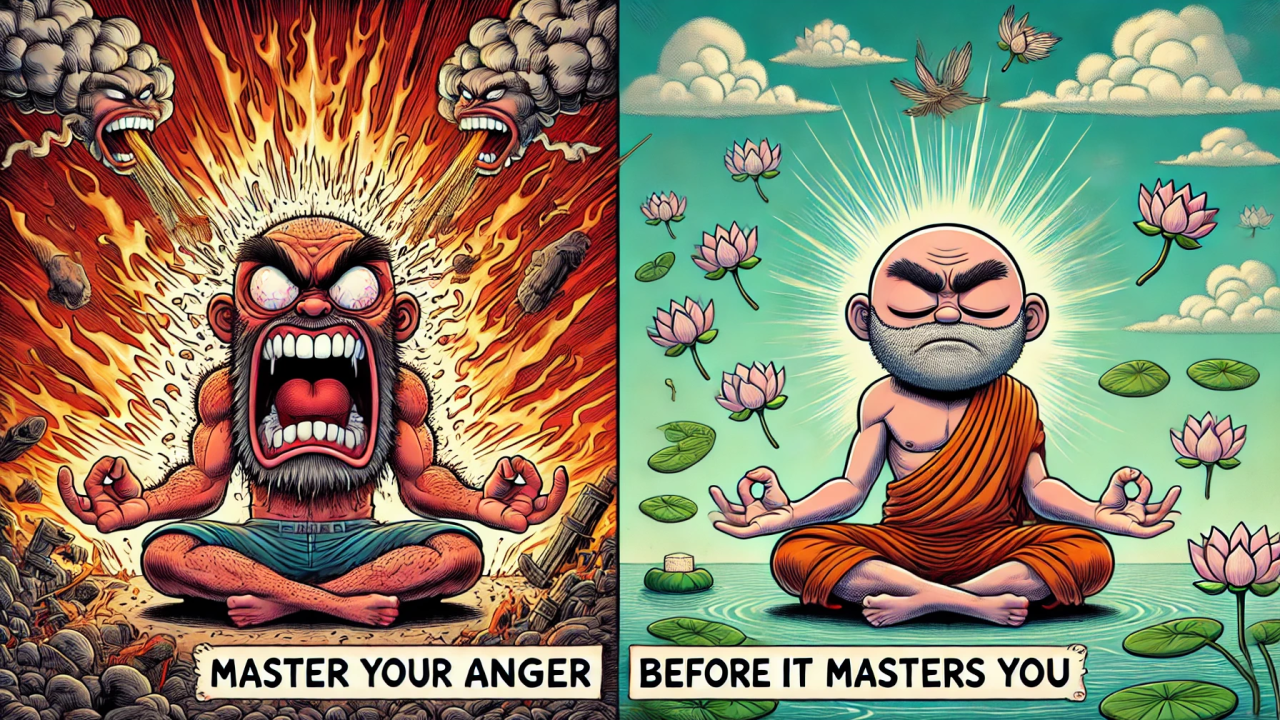
Before You Burn the Bridge: A Deep Dive into Anger and Self-Regulation
Everyone knows what anger is because no one can claim, "I don't know what anger is" or "I never get angry." It is something we all experience constantly. Since anger is a part of every one of us, let us undertake an inquiry into anger.
Anger is an inherent and complex psychological phenomenon, manifesting across diverse cultures, philosophical traditions, and cognitive frameworks. It arises as an affective response to perceived threats, moral violations, or frustrations and varies in intensity from mild irritation to uncontrollable fury. Despite its ubiquity, anger remains one of the least understood and poorly regulated emotions. Contemporary research in psychology, behavioral neuroscience, and ethical philosophy underscores the necessity of anger management for individual well-being and societal harmony.
The Subtle Triggers of Anger: Everyday Moments That Ignite Fury
Anger doesn’t always emerge from grand betrayals or life-altering events—it lurks in the smallest, most mundane moments of daily life, waiting to explode. Imagine this: you gently take a cell phone or video game away from a child—or even an adult—and within seconds, what was a mildly irritated reaction morphs into a full-blown fit of rage. Their attachment to that device fuels an instant surge of anger, entitlement, and defiance, making it feel as if you’ve committed a grave injustice. But is it really about the device, or is it about control?
Then, there’s social media outrage—a modern battlefield of silent wars and unsaid grievances. We’ve all been there: you send a message, someone reads it but doesn’t reply, and suddenly, a wave of resentment, rejection, and frustrationbuilds up. Why? Because deep down, we expect acknowledgment—even from people who may be preoccupied. The perceived indifference stings, triggering a spiral of passive-aggressive thoughts, unfollowing sprees, or cryptic status updates dripping with unspoken anger.
Anger also strikes when we feel interrupted or disregarded—whether it’s a boss cutting you off in a meeting, a friend talking over you, or even a partner scrolling through their phone while you speak. That moment of invisibility, of feeling unheard, fuels resentment, because our need for validation is unmet. It’s the same when someone refuses to see our perspective in an argument—anger erupts not necessarily from the disagreement itself, but from the feeling of being dismissed or unimportant.
Or take the classic case of standing in a long line, watching someone cut ahead, and feeling an irrational surge of furyas if they’ve violated a sacred social contract. The same applies when we’re stuck in traffic, honking in vain at a driver who won’t budge, as if our rage could magically part the congestion. The anger isn’t really about the wait—it’s about the loss of control, the helplessness, the sense of being disrespected.
These everyday moments reveal that anger often isn’t about what actually happens—it’s about what it represents. The loss of control, the lack of acknowledgment, the disruption of expectations—these are the real culprits. Recognizing this hidden anatomy of anger is the first step to mastering it, before it quietly masters us.
By integrating neuroscientific perspectives with scriptural wisdom, we gain a holistic understanding of anger’s psychological underpinnings, its destructive potential, and the methodologies required to master it.
The Bhagavad Gita (2.63) presents a cautionary exposition of anger’s degenerative effects:
This verse encapsulates the progressive deterioration triggered by unregulated anger—cognitive impairment, ethical distortion, and ultimately, self-destruction.
In fact, Thirukural 305, it states:
If you want to guard yourself, guard against anger; If unguarded, anger will kill you.
Hanuman’s Repentance on His Anger – Sundara Kandam (Sarga 55)
In Sundara Kandam, Sarga 55, Hanuman undergoes deep self-reflection after burning Lanka. Though his actions were driven by righteous anger, he begins to question whether he acted with wisdom or allowed his emotions to overpower his judgment. This episode is one of the greatest lessons in anger management, self-control, and emotional intelligence in the Ramayana.
Key Verses from Sundara Kandam – Sarga 55
1️⃣ The Wise Are Those Who Think Before They Act
📖 धन्यास्ते पुरुषश्रेष्ठ ये बुद्ध्या कृत्यदर्शिनः | न्यायेनार्जितवित्तस्य यथान्यायं प्रयोजकाः || 55.1 ||
🔹 Meaning: "Blessed indeed are those great men who act with wisdom, foresee the consequences of their actions, and righteously use their strength and resources."
🔥 Key Lesson:
True strength lies in foresight and restraint, not in reckless action.
Hanuman realizes that a wise person analyzes before reacting, ensuring that anger does not lead to unintended destruction.
2️⃣ Anger Can Lead to Regret
📖 किं स्विदस्यापराधेन नगरं धक्ष्यते मया | प्रधर्षणं च वैदेह्या भूय एव भविष्यति || 55.3 ||
🔹 Meaning: "What offense has this city committed for me to set it ablaze? Have I caused greater harm to Sita by acting in anger?"
🔥 Key Lesson:
Hanuman questions whether his anger was righteous or excessive.
Even if anger seems justified, it must be controlled to avoid harming innocent people.
3️⃣ Anger is Like Fire – It Burns Everything Without Discrimination
📖 दीप्ता हि स्फुलिङ्गा इव क्रुद्धानां विप्रकीर्यते | क्रोधमूलं महद्वैरं क्रोधमूलाः क्षयाः स्मृताः || 55.5 ||
🔹 Meaning: "Anger spreads like flying sparks from a fire. It is the root of great enmity, and history has shown that anger leads to destruction."
🔥 Key Lesson:
Uncontrolled anger spreads like wildfire, harming both friends and foes.
Unchecked fury can lead to lifelong consequences—whether in relationships, workplaces, or society.
4️⃣ True Strength Lies in Controlling Anger
📖 यः शक्नोति रोषं वा कामं वा यो निगृह्णाति | स बुद्धिमान् नरो लोके युक्तो भवति सेवया || 55.7 ||
🔹 Meaning: "He who can control his anger and desires is truly wise and capable of serving a greater purpose in the world."
🔥 Key Lesson:
Self-restraint is a sign of wisdom, not weakness.
Hanuman acknowledges that true heroes are not those who act on impulse, but those who master their emotions.
5️⃣ The Greatest Leaders Reflect on Their Actions
📖 उत्सवे व्यसने प्राप्ते दुर्भिक्षे शत्रुसङ्कटे | राज्ञः प्रकृतिवैगुण्यं ज्ञायते न च केनचित् || 55.10 ||
🔹 Meaning: "A person’s true nature is revealed in times of crisis—whether in joy, sorrow, famine, or conflict. Only a wise man reflects on his faults and corrects them."
🔥 Key Lesson:
The greatest leaders self-evaluate instead of blaming others.
Hanuman, despite being powerful, questions himself, showing self-awareness and humility.
🛑 How Hanuman’s Anger Management Applies Today
1️⃣ Think Before You React: Never act in anger before considering the consequences.
2️⃣ Anger Spreads Like Fire: It can destroy relationships, careers, and inner peace.
3️⃣ True Strength is in Restraint: Power is not in shouting or breaking things, but in self-control.
4️⃣ Self-Reflection is Key: Even when we make mistakes in anger, we should pause and correct ourselves.
Rage Unraveled: The Psychology, Consequences, and Management of Anger
1. What is Anger?
Anger is an internal force that compels us to act, speak, or think in ways we wouldn’t normally choose. It makes us:
Do things we don’t want to do.
Say things we don’t want to say.
Think thoughts we don’t want to think.
At the peak of anger, we believe ourselves to be Rishis (sages) because we start cursing others, thinking our words will turn into reality. But in reality, our language deteriorates, we may throw or break objects, and act in ways we later regret.
The Psychological and Ethical Nature of Anger
Anger is a profound emotional force capable of significantly shaping behavior, cognition, and interpersonal relationships. It manifests in the following ways:
Cognitive Disruption – Distorted perceptions of reality, heightened reactivity, and impaired judgment.
Verbal Expression – Manifestation through aggressive speech, sarcasm, or derogatory language.
Behavioral Response – Acts of physical aggression, destruction, or passive-aggressive tendencies.
At its core, anger influences neural pathways by stimulating the amygdala, the brain’s center for processing threats. This activation triggers a cascade of physiological responses, including increased cortisol levels, heightened blood pressure, and accelerated heart rate. When left unchecked, chronic anger correlates with severe health issues, such as cardiovascular disease, anxiety disorders, and neurodegenerative conditions.
Tripartite Manifestation of Anger
Physiological – Increased autonomic arousal, excessive stress hormones, and inflammatory responses.
Cognitive – Repetitive negative thought patterns, ruminative hostility, and judgment biases.
Behavioural – Externalised aggression, impulsive decision-making, and breakdown of social cohesion.
Anger manifests on three levels:
Physical – throwing things, breaking objects.
Verbal – using harsh words, cursing.
Mental – harbouring resentment and hatred.
2. Effects of Anger
Anger leads to many negative consequences, including:
The Consequences of Anger: A Multidimensional Examination
Anger inflicts both internal and external damage, encompassing physical, psychological, social, and ethical dimensions.
1. Interpersonal Disruption
Erosion of Trust – Anger diminishes credibility and fractures relationships.
Conflict Escalation – Heightened aggression fosters enduring interpersonal discord.
Social Alienation – Habitually angry individuals experience estrangement and diminished social capital.
2. Psychological and Cognitive Impairment
Diminished Self-Regulation – Chronic anger impairs prefrontal cortex functions responsible for rational decision-making.
Memory Distortion – Intense anger contributes to selective recall, reinforcing cognitive biases.
Identity Fragmentation – Unresolved anger leads to emotional instability and self-destructive tendencies.
3. Physiological and Health Deterioration
Hypertension and Cardiac Risk – Elevated blood pressure and cardiovascular strain.
Neurological Consequences – Chronic stress exposure leads to neuronal damage and cognitive decline.
Compromised Immunity – Prolonged anger weakens immune function, increasing susceptibility to illness.
4. Legal and Professional Ramifications
Workplace Conflicts – Uncontrolled anger leads to hostility, harassment complaints, and career setbacks.
Legal Consequences – Outbursts of anger can result in litigation, restraining orders, or professional censure.
Anger as an Internal & External Enemy
Anger is both an internal and external enemy:
Internally, it destroys virtues like love, compassion, forgiveness, and refined speech.
Externally, it isolates us. An angry person will have fewer social connections or reputations. They get isolated as people find them unsuitable.
Anger is compared to fire:
It burns everything around it.
Ultimately, it consumes the person holding onto it.
3. Why Do We Get Angry?
Now that we understand anger, let’s analyze its causes. There are seven primary reasons why we get angry:
1. Hatred
Hatred is the seed of anger.
Expressed hatred = Anger.
Suppressed anger = Hatred.
If we repeatedly get angry at someone for everything they do, it means we have deep seated hatred toward them.
2. Attachment
Strong attachments lead to anger when harm comes to the object of attachment.
Even imaginary harm can trigger anger.
If the cause of harm is weaker than us, we express anger.
If the cause is stronger than us, we feel fear instead.
For example:
If a child breaks an expensive toy or an object, we freak out.
If our boss or another important person breaks it, we suppress anger and pretend it's okay.
3. Expectations
We expect people to behave a certain way.
When reality doesn’t match our expectations, we feel anger.
Example: If a mentally or physically challenged person crosses the street slowly when we drive, we ignore it. But if another person does the same, we get angry. The difference is the expectation.
4. Impatience
Lack of patience leads to anger.
As we grow older, our ability to tolerate discomfort reduces, making us short-tempered.
5. Using Anger as a Tool
Some people use anger deliberately to get things done.
Parents, teachers, and managers often resort to anger to enforce discipline.
But over time, this becomes a habit, and we struggle to communicate calmly.
6. Hurt Ego
When our ego is wounded, we react with anger.
Example:If someone lies to us, we feel disrespected and react with anger.If someone ignores us at a social event, we feel insulted and get angry.
7. Habitual Anger
Some people are angry by default.
They wake up angry, criticize everything, and always find a reason to be upset.
This is deeply ingrained in their personality.
Most of our anger falls under one of these three categories:
Attachment
Hatred
Habit (Personality-based anger)
4. Managing Anger
Now that we have analysed anger and its causes, the next step is learning how to control and manage it.
Anger Management Strategies
Self-awareness – Identify what triggers your anger.
Patience & Tolerance – Increase your ability to endure discomfort.
Lower Expectations – Accept that people behave differently.
Detachment – Reduce strong attachments that lead to anger.
Conscious Communication – Avoid using anger as a tool for control.
Ego Awareness – Recognize when your ego is getting hurt.
Channeling Anger Positively – Convert anger into constructive action.
Regular Self-Reflection – Continually observe and refine your behavior.
Lets delve into these anger management techniques in detail:
Anger Management: Key Considerations
Before discussing anger management techniques, we must first understand four key points:
Anger management strategies must be practiced when we are calm.These methods cannot be applied in the middle of an angry outburst.When anger takes over, we lose control—our mind becomes rigid and unreceptive.
Do not advise an angry person in the moment.Telling someone "calm down" or offering anger management tips during their outburst will only make them angrier.The best approach is silence and non-provocation.
Anger cannot be eliminated in isolation.If we wish to remove anger, we must also eliminate other negative traits.Good virtues (satvik gunas) must be cultivated simultaneously.
Anger is deeply ingrained in our nature.We do not plan to get angry, nor can we decide "From tomorrow, I will not get angry."Since it has become a part of our personality, it cannot be removed overnight.Steady, gradual effort is required for transformation.
The FIRE Framework for Anger Management
Anger, like fire, must be carefully managed before it spreads uncontrollably. The FIRE model provides a structured way to understand and regulate anger through four key dimensions:
F - Frequency 🔄
· How often do you get angry?
· Do small inconveniences trigger you daily, or is anger a rare occurrence?
· Identifying patterns helps in recognizing triggers and preventing habitual anger.
I - Intensity 🔥
· How strong is your anger when it arises?
· Is it a mild annoyance, a heated argument, or a destructive rage?
· Understanding intensity helps in preventing escalation before it spirals out of control.
R - Recovery ⏳
· How quickly do you calm down after an outburst?
· Do you let anger fester for hours or days, or can you regulate it within minutes?
· Shortening recovery time is key to maintaining emotional stability.
E - Evaluation 🧐
· Was your anger justified, or was it based on misinterpretation, ego, or unrealistic expectations?
· Did the situation truly warrant an outburst, or was it a momentary lapse in control?
· Evaluating anger after the fact helps in reducing future occurrences and fostering emotional intelligence.
By controlling the FIRE, we can prevent anger from burning bridges, damaging relationships, and clouding judgment, allowing us to respond rather than react.
Anger Management Techniques
Since we identified the root causes of anger, we will now explore how to counter each one.
1. Overcoming Hatred
Hatred is the strongest cause of anger.
Manifested hatred = anger.
Unmanifested anger = hatred.
How to Remove Hatred
We often develop hatred towards people, animals, or even objects.
Once hatred develops, everything the person does triggers anger:
If they speak to us → "Look at their arrogance!
"If they don’t speak to us → "They are ignoring me!"
If they behave normally → "I don't trust them!"
This shows that hatred clouds our perception.
To remove anger, we must first eliminate hatred. But how?
Using Vedantic Wisdom to Overcome Hatred
The Upanishads tells us:
The mind and sense organs can be either divine (devas) or demonic (asuras).
When the eyes see good things, ears hear good words, and mouth speaks truth, they are devas.
When the same organs indulge in negativity, they become asuras(demons).
These constant battles between devas(gods) and asuras(demons) happens within each of us.
The above narrative teaches that every individual is inherently good—their prana (life force) is pure.
Even a thief and a policeman are the same when they are asleep—because their sense organs are inactive.
Our hatred is not towards a person, but towards their words and actions.
If we can separate the person from their behavior, we will realize:
“I dislike their actions, but I do not hate the person.”
This subtle shift in perspective is key to removing hatred and thus reducing anger.
Practical Exercise: Japa or Mantra Repetition
Mentally repeat: "I will not hate anyone."
If hatred is directed at a specific person, visualize them and say: "
I hold no hatred towards this person."
This auto-suggestion weakens hatred over time. As hatred diminishes, anger reduces automatically.
2. Overcoming Attachment
Anger is directly proportional to attachment.High attachment = Severe anger.
When we love something too much, anything that threatens it triggers anger.
Reducing Excessive Attachment
We must convert necessities into preferences:
”I prefer morning coffee or tea, but if it’s not available, it’s okay."
List all our strong attachments and work on reducing them gradually.
Remember: Excess attachment leads to suffering. It makes us enslaved to external things.
"If I have it, I’m happy. If I lose it, I’m unhappy." This dependence must be weakened.
3. Managing Expectations
Unmet expectations cause anger.
We expect people to behave in a certain way, but they often don’t.
Solution: Pair Expectation with Acceptance
Expectation is not wrong.
The problem arises when we cannot accept an unfavorable outcome.
"I expect this to happen, but if it doesn’t, I accept it."
Identifying and Removing Wrong Expectations
Make a list of all your expectations from others.
90% of expectations are unreasonable.
Even reasonable expectations should be paired with acceptance.
4. Cultivating Patience
Impatience leads to anger.
Our mood dictates how much patience we have.
Practicing Delayed Reaction
When impatience arises, stay silent instead of reacting immediately.
Anger dissipates over time if not verbalized.
Building Patience through Japa
Chant "Kshama" (Patience) or practice deep breathing.
Forgiveness is also key—if we hold onto the past, anger persists.
Legal Consequences of Anger: Workplace Harassment, Family Law, and Protective Statutes
Unchecked anger has profound implications that extend beyond personal relationships, often manifesting in legal disputes, regulatory violations, and criminal actions. Legislative frameworks across jurisdictions recognize the destructive potential of anger-driven behaviors, particularly in domains such as workplace harassment, family law, child abuse, and elder protection. This article provides a critical examination of the legal ramifications associated with anger and the mechanisms in place to address and mitigate its impact.
1. Workplace Harassment and the Legal Constraints on Anger
1.1 Defining Workplace Harassment and Its Relation to Anger
Workplace harassment encompasses unwarranted conduct that creates a hostile or intimidating professional environment. It may stem from uncontrolled anger and manifest in verbal abuse, physical intimidation, or psychological coercion. Legal statutes across various jurisdictions define and regulate workplace harassment to ensure a safe working environment.
1.2 Consequences of Workplace Anger and Harassment
Legal repercussions, including civil penalties and employment termination.
Workplace investigations leading to disciplinary actions.
Psychological compensation claims for emotional distress.
Compulsory anger management and behavioral intervention programs.
2. Family Law: Divorce, Child Welfare, and Elder Protection
2.1 Anger in Marital Disputes and Legal Separation
Persistent anger contributes significantly to marital breakdown and often leads to legal dissolution of marriage. Family courts address the implications of anger through divorce proceedings, child custody evaluations, and protective orders.
2.2 Legal Safeguards Against Child Abuse and Emotional Harm
Children are particularly vulnerable to anger-induced maltreatment. Jurisdictions worldwide enforce stringent child protection laws to mitigate psychological and physical abuse.
2.3 Legal Frameworks for the Protection of Elderly Individuals
Anger-driven abuse frequently extends to elderly individuals, particularly those dependent on family members or caregivers. Legal frameworks address elder neglect, financial exploitation, and physical abuse.
3. Criminal and Civil Liabilities Arising from Anger-Induced Actions
Anger-driven behaviors often culminate in legal disputes involving criminal prosecution or civil liability claims.
3.1 Criminal Offenses Related to Anger
Assault and Battery: Physical aggression resulting from anger leads to criminal prosecution and potential imprisonment.
Harassment and Stalking: Persistent aggressive conduct may result in protective orders and criminal sanctions.
Homicide and Manslaughter: Extreme manifestations of anger can escalate into fatal violent crimes, warranting severe legal consequences.
3.2 Civil Liabilities Associated with Anger
Defamation Claims: Slanderous speech and public humiliation arising from emotional outbursts may lead to civil defamation lawsuits.
Emotional Distress Litigation: Victims of prolonged verbal aggression or psychological abuse may pursue financial restitution through civil claims.
4. Judicial and Psychological Interventions for Anger Regulation
Legal systems increasingly integrate psychological interventions to manage anger-driven behaviors and mitigate their societal impact.
4.1 Court-Mandated Anger Management Programs
Individuals convicted of harassment, domestic abuse, or workplace aggression may be required to complete structured anger management courses as part of sentencing.
4.2 Family Law Interventions and Therapeutic Mediation
Courts often mandate family counseling, therapy, or dispute resolution programs to address anger-related conflicts in custody disputes and divorce settlements.
4.3 Workplace Training on Conflict Resolution and Emotional Regulation
Corporations implement internal policies requiring conflict resolution training and emotional intelligence programs to minimize workplace hostility.
Conclusion: Toward the Cultivation of Emotional Equanimity
Mastery over anger constitutes an essential component of emotional intelligence, ethical reasoning, and psychological resilience. By synthesizing behavioral neuroscience, cognitive psychology, and scriptural ethics, individuals can:
Enhance cognitive control over impulsive reactivity.
Develop superior conflict-resolution skills.
Cultivate spiritual and moral wisdom for emotional transcendence.