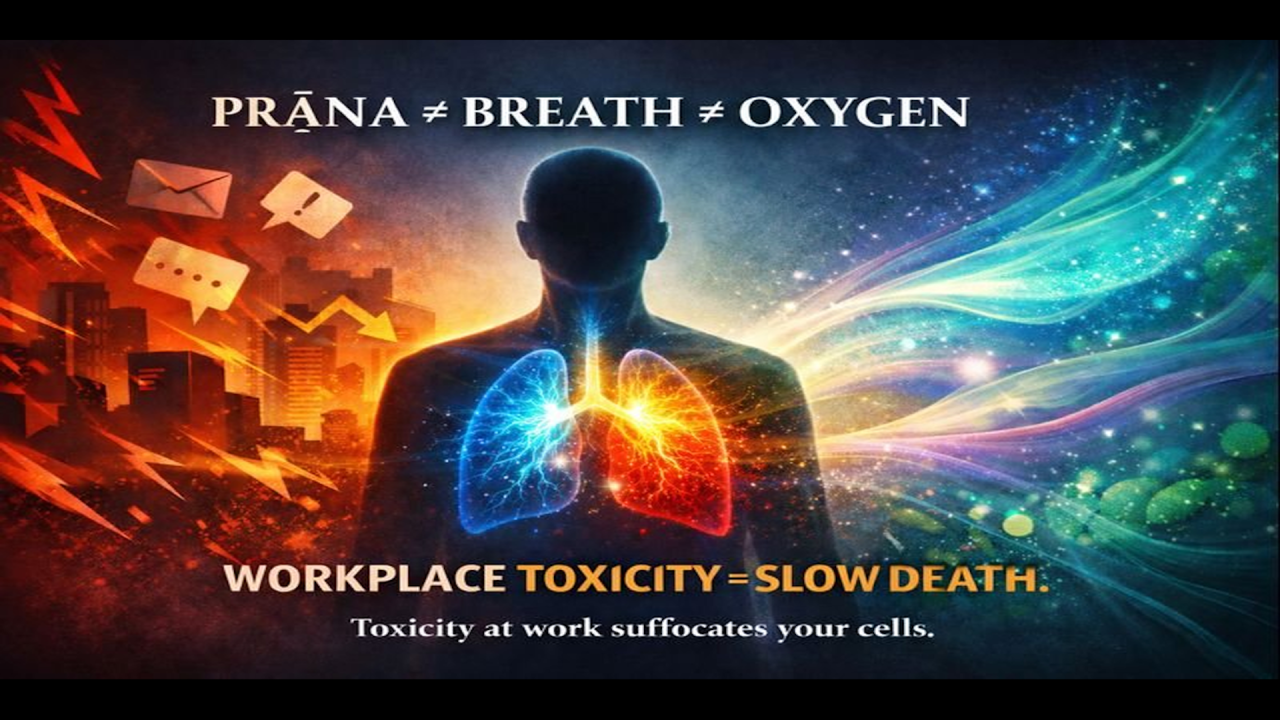
How Workplace Harassment, Ego, Fear & Politics Literally Suffocate Your Cells
DISCLAIMER: This article is for educational purposes only and does not constitute medical advice. The practices described should be learned from qualified instructors. Individuals with respiratory, cardiovascular, or psychiatric conditions should consult healthcare providers before beginning any breathing practice. The connection between workplace stress and disease is supported by research, but individual outcomes vary. If you are experiencing severe workplace toxicity, seek support from HR professionals, legal counsel, mental health professionals, or career counselors as appropriate.
The Three-Level Reality: Understanding the Trinity
Before we understand how workplace toxicity destroys health, we must understand that human vitality operates on three distinct but interconnected levels:
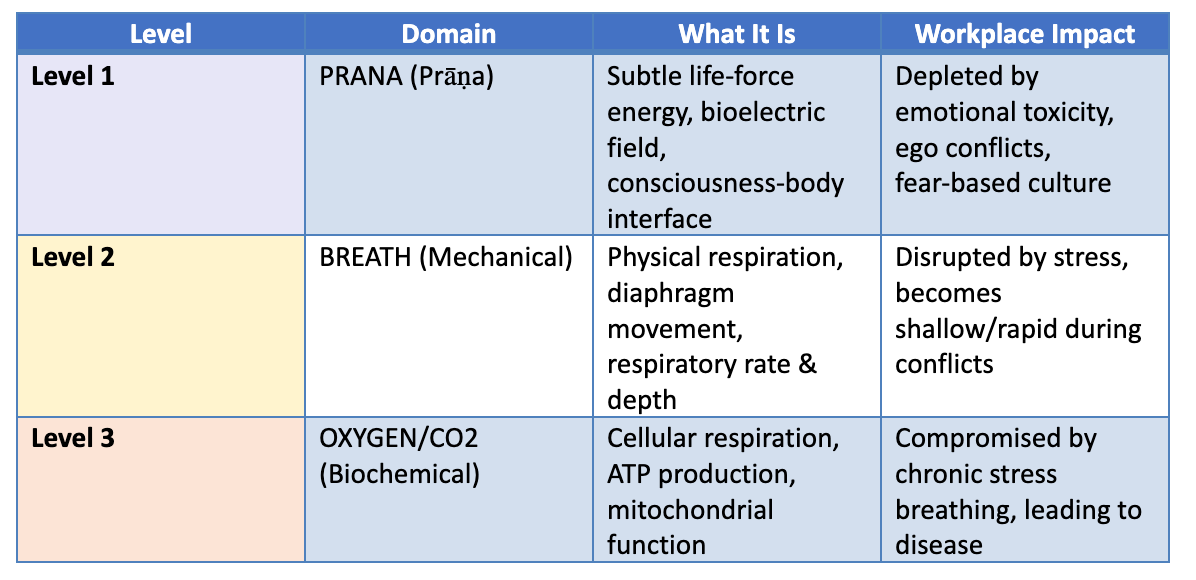
🔑 KEY INSIGHT: Workplace toxicity doesn't just cause "stress"—it systematically dismantles all three levels, creating a cascading health crisis that manifests years later as cancer, heart disease, Alzheimer's, and autoimmune conditions.
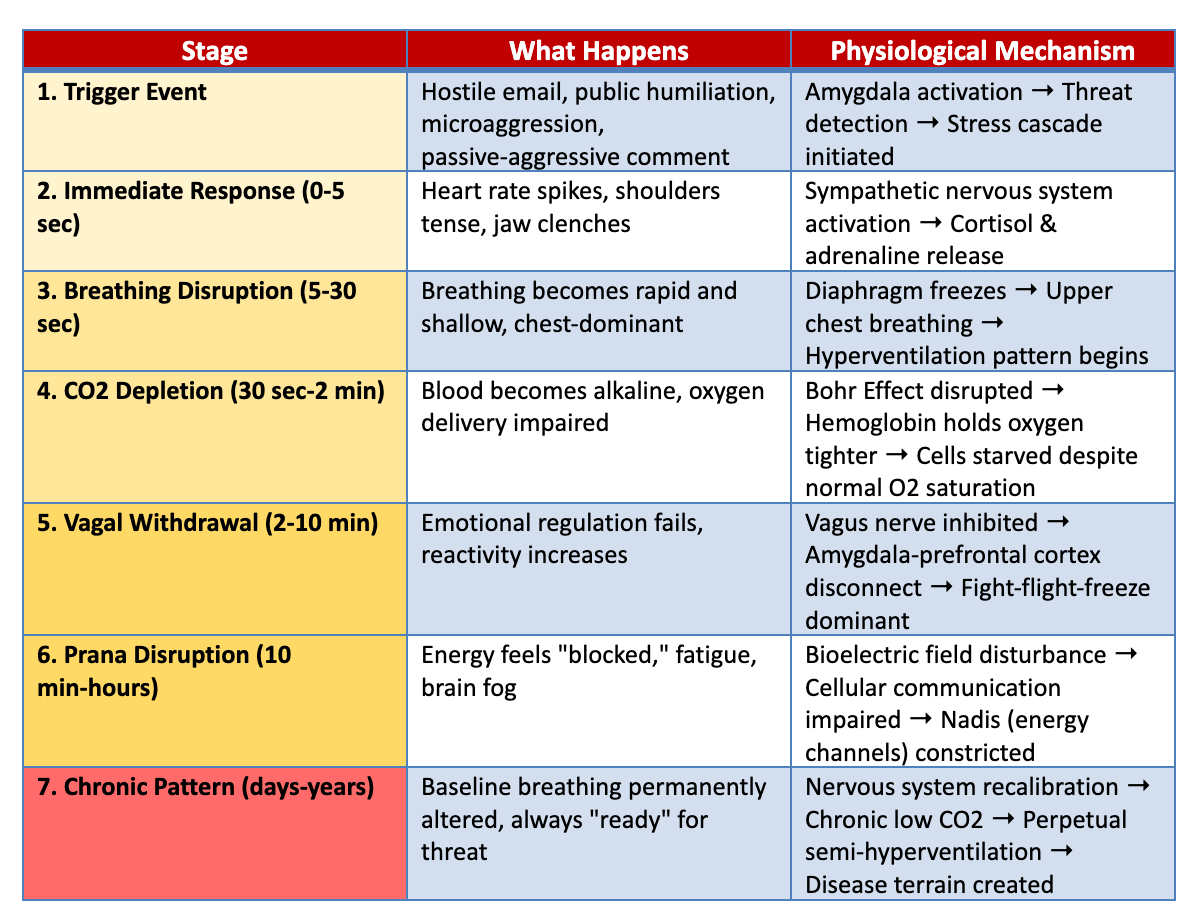
The Workplace Suffocation Cascade
Here's the precise physiological pathway from a hostile meeting to cellular hypoxia:
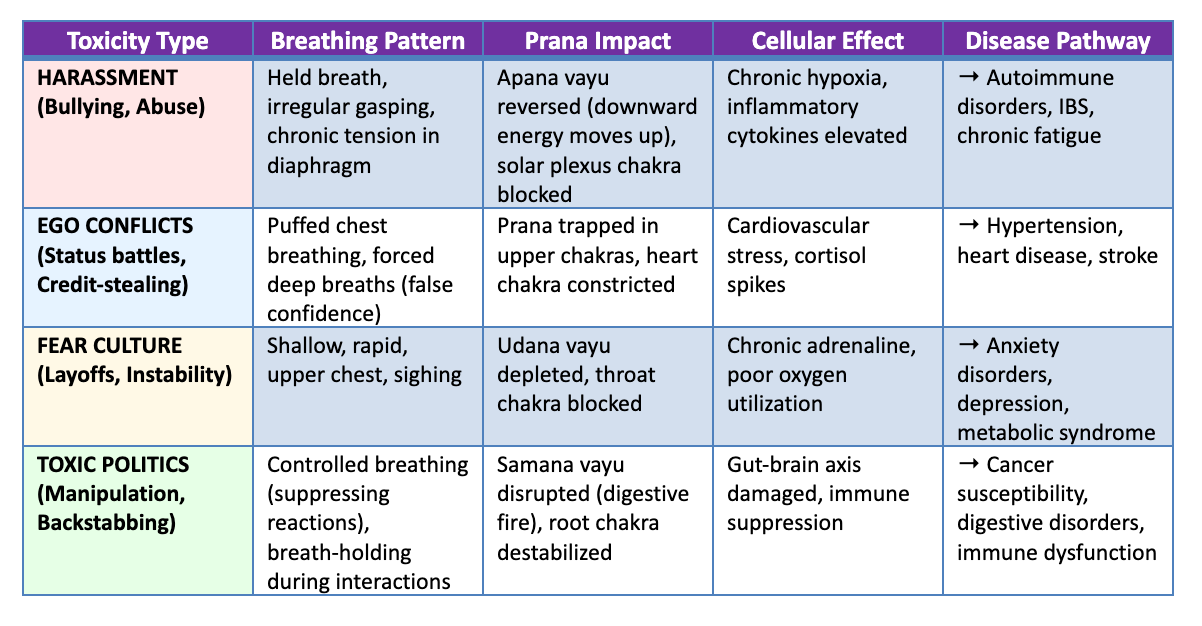
The Four Horsemen of Workplace Toxicity
Four specific workplace dynamics create distinct breathing pathologies:
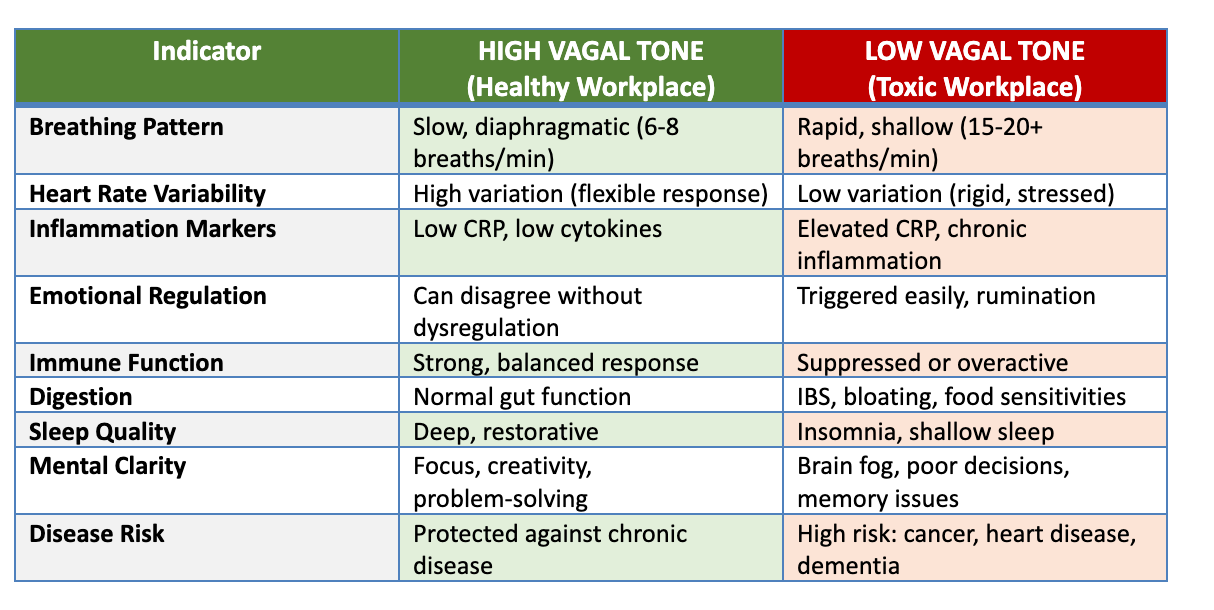
The Vagus Nerve: Your Corporate Survival Gauge
The vagus nerve is the physiological bridge between workplace experience and long-term health. It's literally measuring the safety of your environment and adjusting your biology accordingly.
Real-World Scenarios: The Breathing-Disease Pathway
Let's trace specific workplace scenarios through the three-level cascade to see exactly how a "normal" corporate experience becomes a disease incubator:
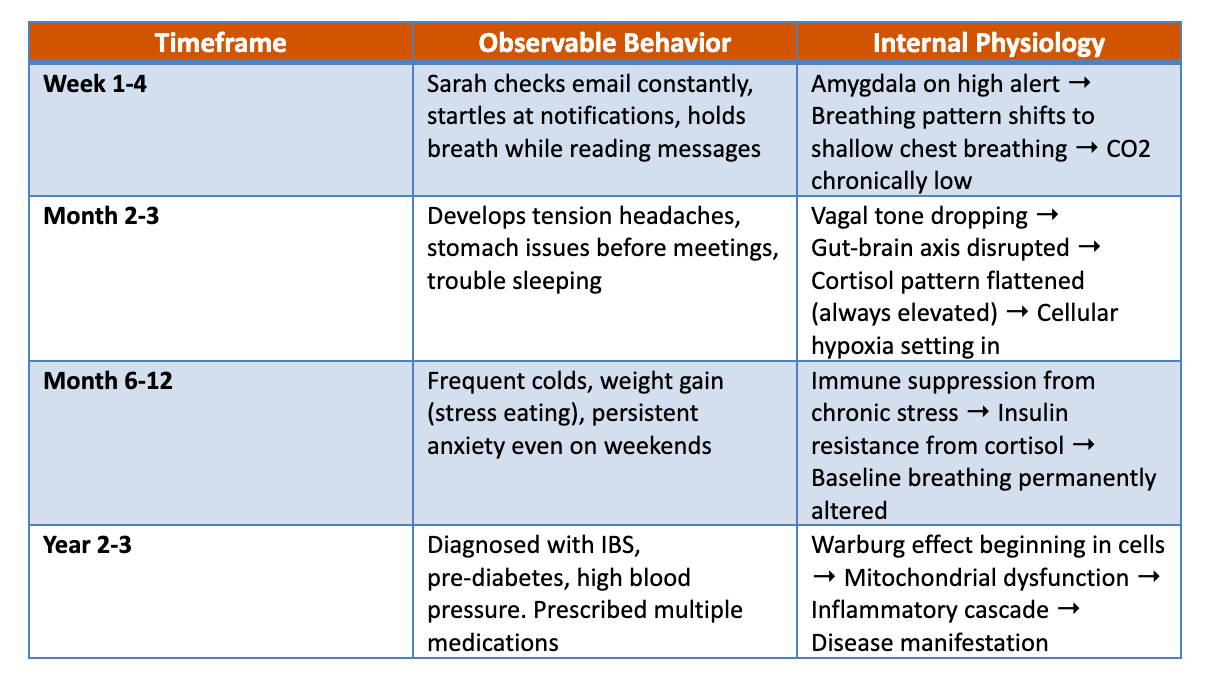
Scenario 1: The Micromanaging Boss
Sarah has a boss who demands constant updates, questions every decision, and creates an atmosphere of perpetual surveillance. Let's watch the cascade:
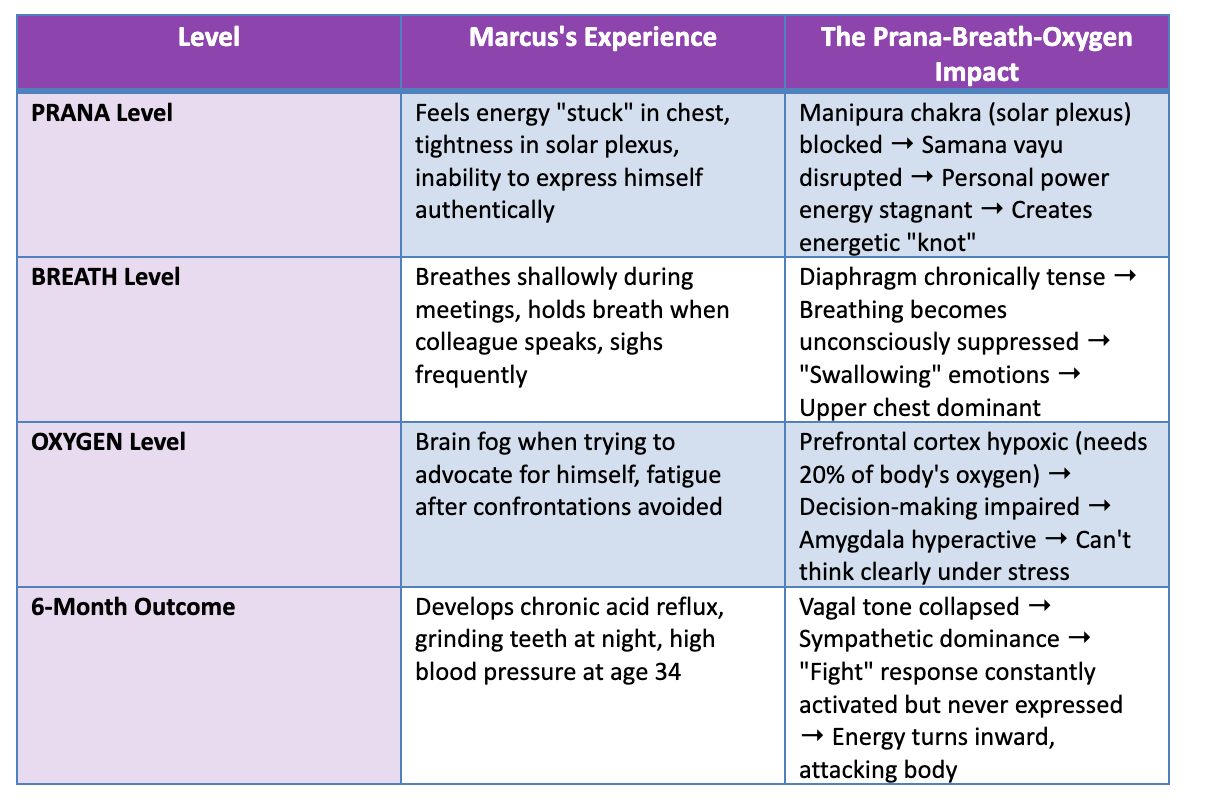
Scenario 2: The Credit Thief
Marcus works with a colleague who consistently takes credit for his ideas in front of leadership. The rage-suppression cycle:
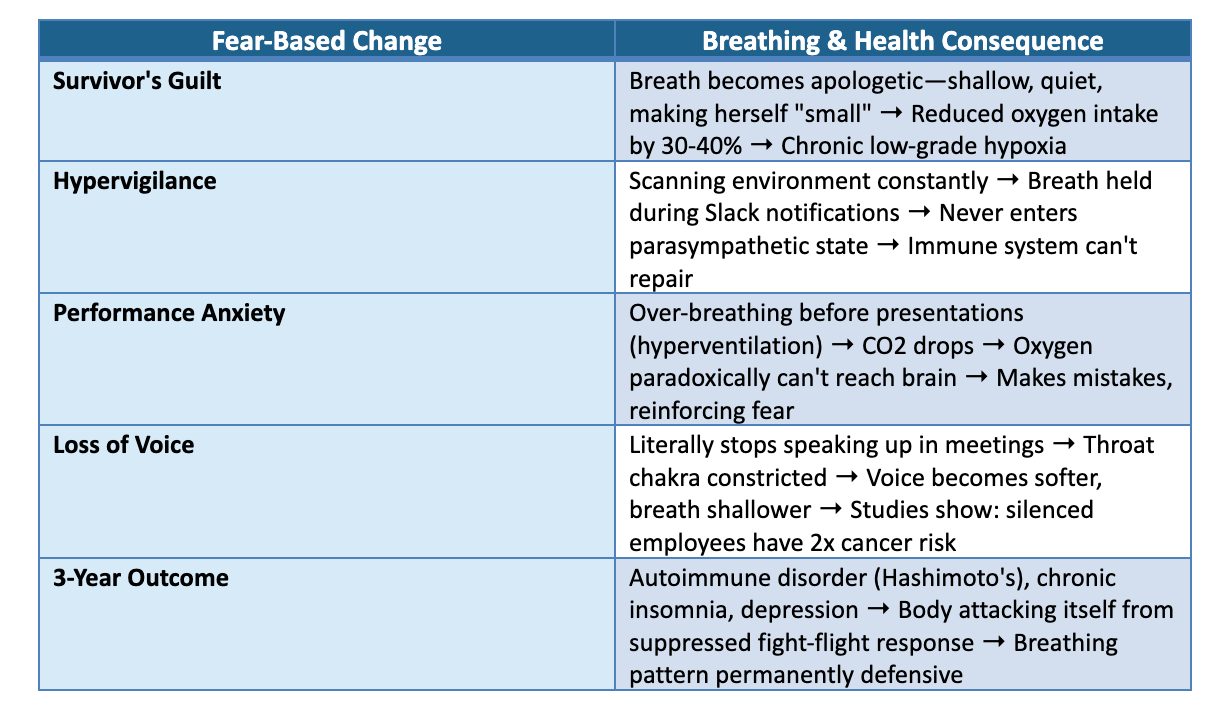
Scenario 3: The Layoff Survivor
Jennifer survived three rounds of layoffs. She's "lucky" to still have her job. Here's what "luck" costs physiologically:
From Breathing Patterns to Disease: The Evidence
The connection between workplace toxicity and specific diseases isn't just correlation—there are clear mechanistic pathways:
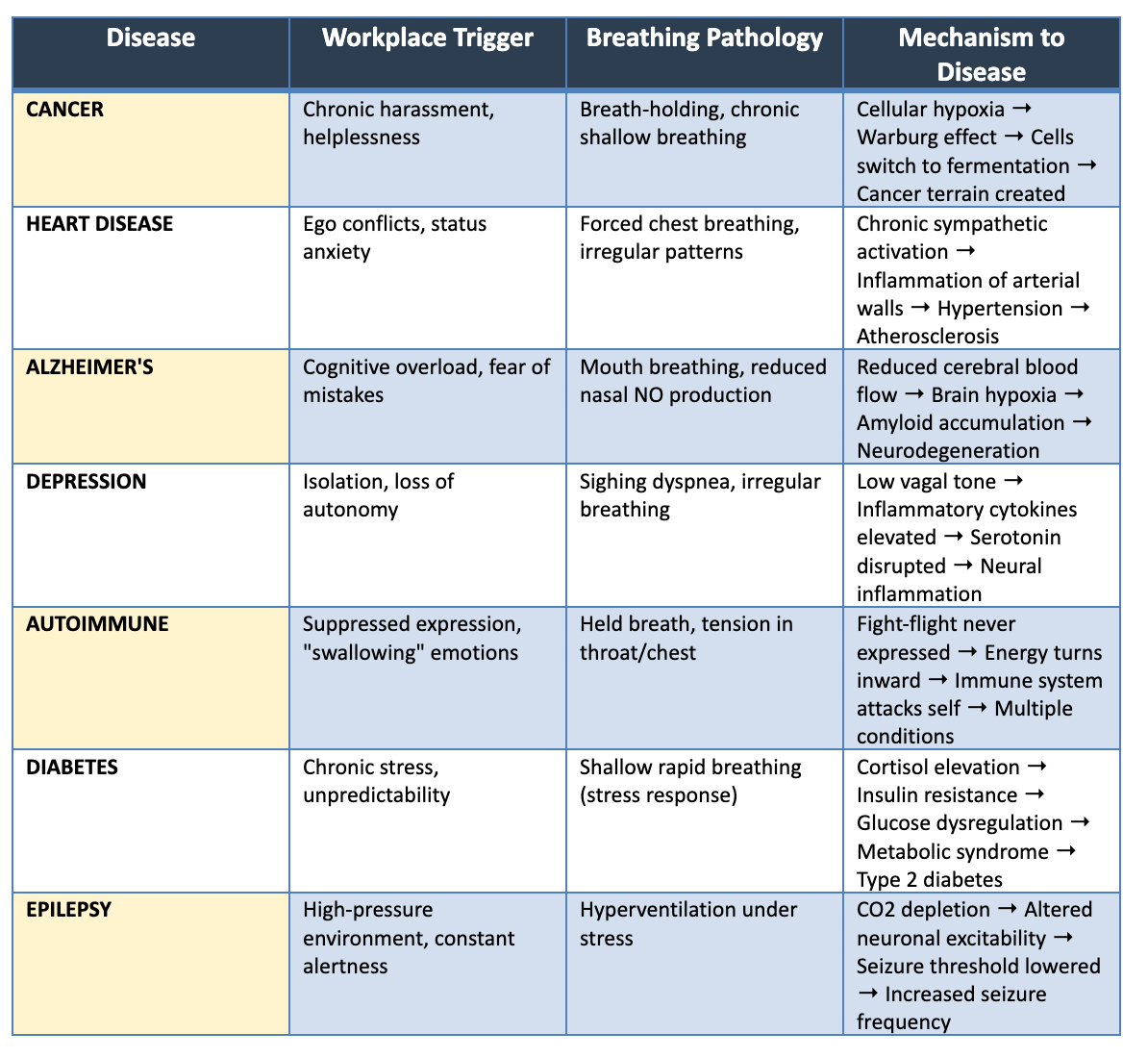
⚠️ CRITICAL INSIGHT: The typical lag time between breathing pattern disruption and disease diagnosis is 3-15 years. This means the toxic job you had in your 30s manifests as cancer in your 40s. The harassment you endured at 25 becomes autoimmune disease at 35. Most people never connect the dots because the gap is too wide. But the body remembers. Every. Single. Breath.
The Antidote: Breathing Practices That Restore All Three Levels
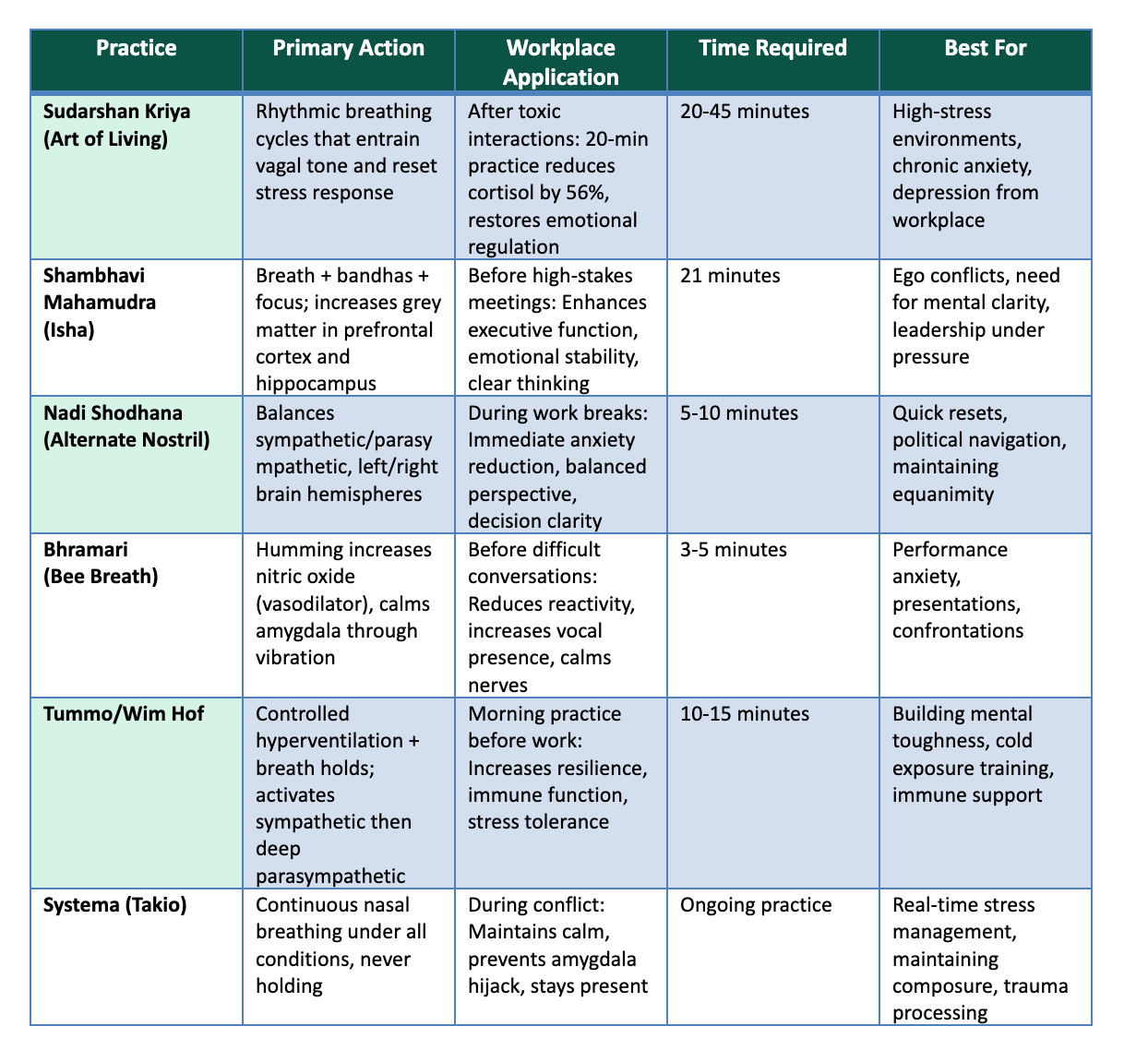
Ancient wisdom traditions developed specific practices that simultaneously work on prana, breath, and oxygen. Here's how each major technique addresses workplace-induced damage:
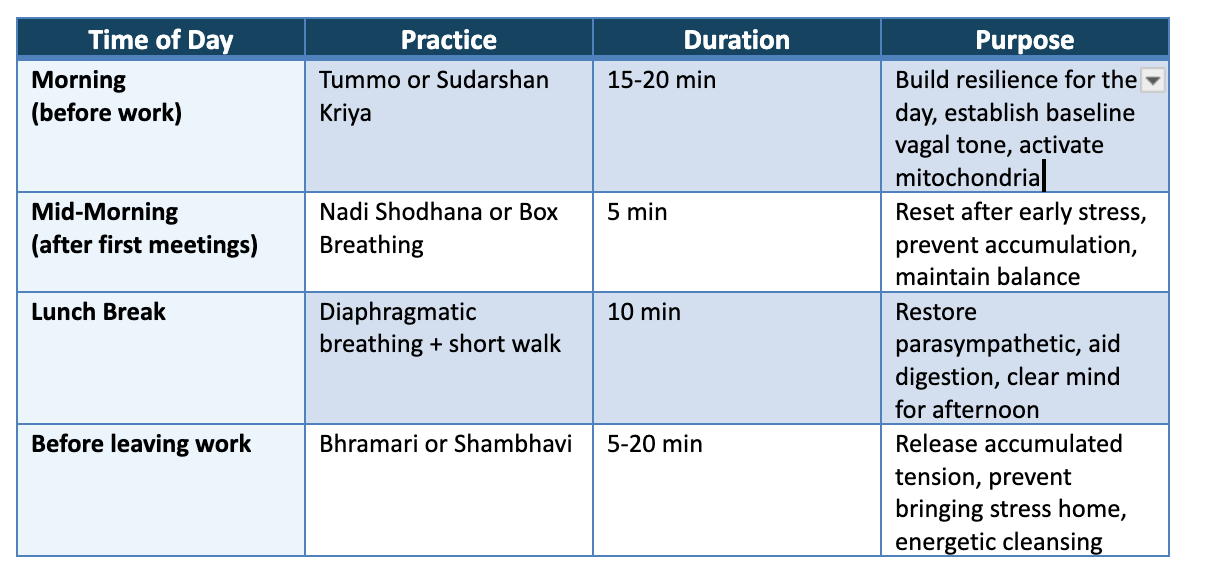
The 3-Level Workplace Restoration Protocol
A practical daily protocol for corporate warriors:
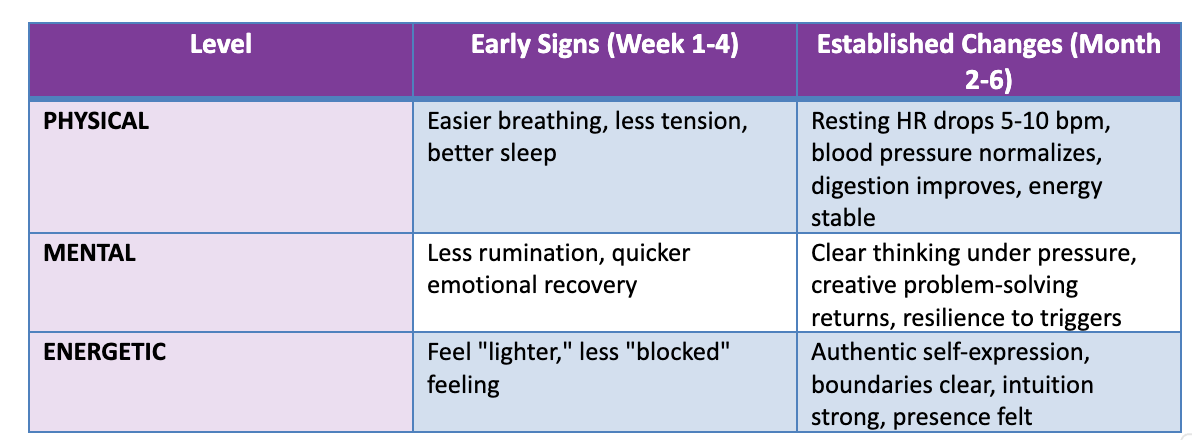
Measuring Your Progress: Integration Markers
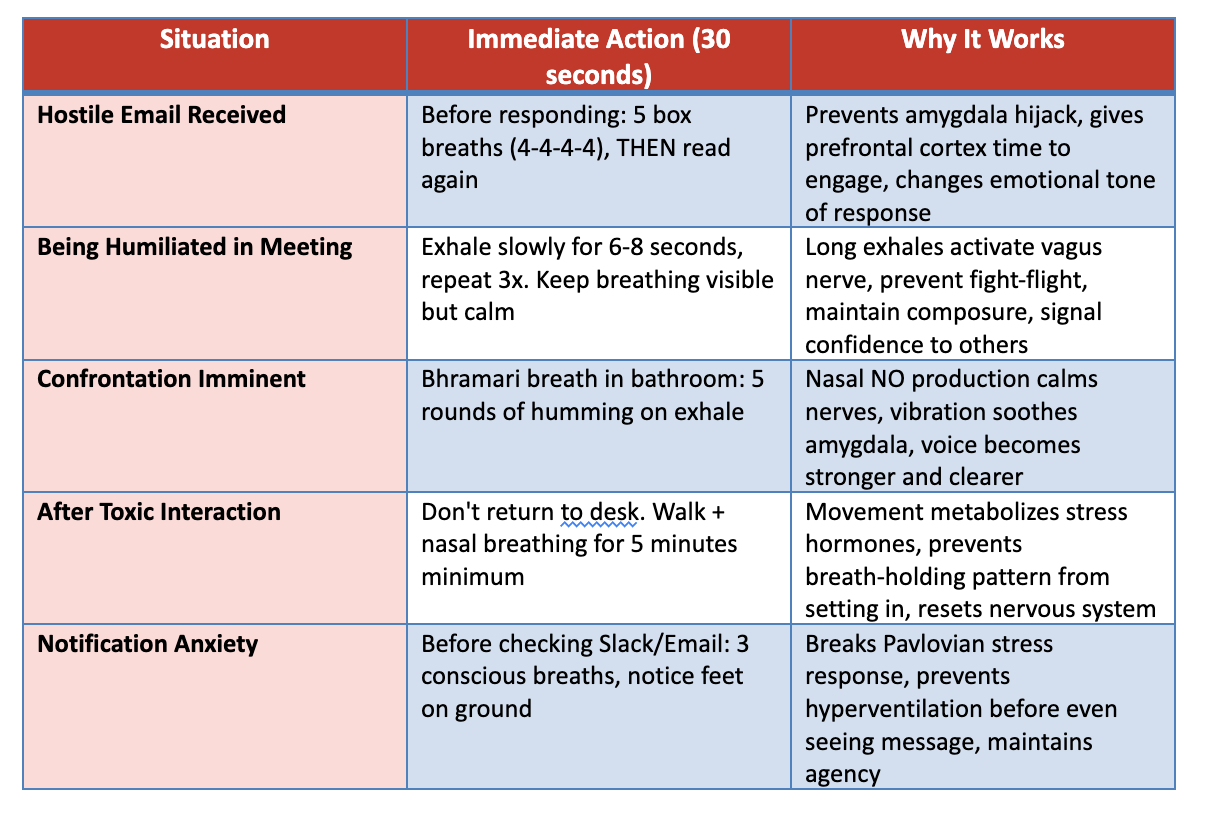
Emergency Protocols: Real-Time Workplace Interventions
When you're in the middle of a toxic situation, here are immediate interventions:
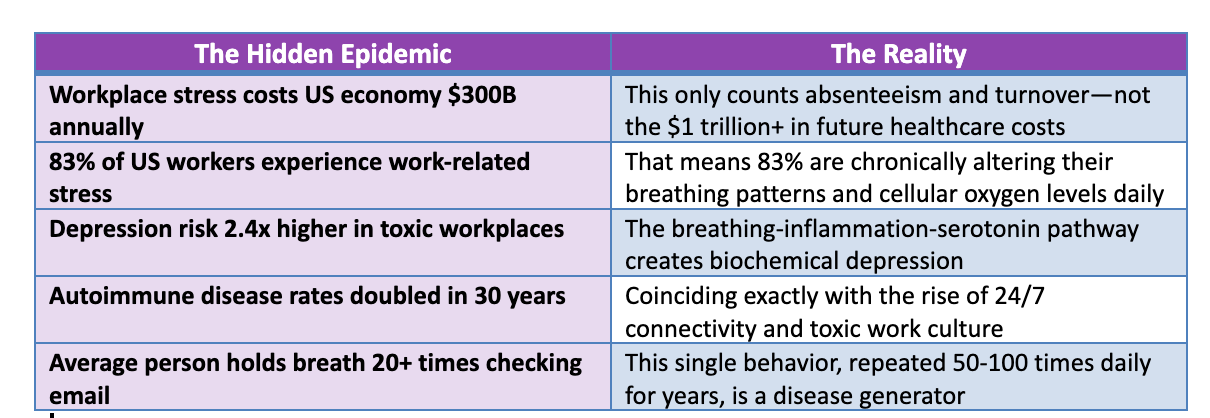
The Bigger Picture: Why This Matters Beyond Individual Health
This isn't just about personal wellbeing—it's about recognizing that toxic workplaces are literally creating a public health crisis that won't show up in statistics for another decade.
What To Do: A Multi-Level Response
For Individuals:
1. Measure your baseline: Track resting respiratory rate (normal: 12-16 breaths/min), heart rate variability, how you feel after work interactions
2. Choose ONE practice: Start with 5 minutes daily of any technique listed above. Consistency > intensity
3. Create breath-aware moments: Before every meeting, after every difficult email, when entering/leaving building
4. Document the pattern: Notice which interactions change your breathing. This awareness itself is protective
5. Set boundaries: If a workplace consistently disrupts your breathing, it's damaging your health. Full stop. Plan your exit
For Leaders & Organizations:
1. Recognize the cost: Toxic culture isn't just "bad morale"—it's creating disease in your workforce that will cost millions in healthcare and lost productivity
2. Measure what matters: Track team respiratory health metrics alongside performance. Healthy breathing = healthy thinking = healthy business
3. Create breathing breaks: 5-minute team breathing practices before high-stress meetings. This is not "woo-woo"—this is performance optimization
4. Model calm breathing: Leaders set the nervous system tone. Your breathing pattern becomes your team's breathing pattern
5. Zero tolerance for breathing disruptors: Bullies, credit thieves, and toxic politicians should be removed not for "culture fit" but for public health
Conclusion: Breathing Between Worlds
We stand at a unique moment in history where ancient yogic wisdom and modern neuroscience are converging on the same truth:
The quality of your breath determines the quality of your cells. The quality of your cells determines the quality of your health. The quality of your health determines the quality of your life.
Workplace toxicity—harassment, ego battles, fear culture, toxic politics—isn't happening "out there" in some abstract space. It's happening in your amygdala, your vagus nerve, your diaphragm, your mitochondria. Every toxic interaction is a micro-injury to your breathing pattern. Every disrupted breathing pattern is a step toward disease.
But here's the profound hope: Because the damage happens through breath, the healing can too. Prana, breath, and oxygen—these three rivers of life—can be restored. The ancient practices weren't just spiritual exercises; they were sophisticated physiological interventions that knew something modern medicine is only now discovering:
You don't need to wait for the culture to change. You don't need permission from leadership. You don't need a new job (though you might choose one). You need to breathe consciously, deliberately, and with the understanding that every breath is either building disease or building health. There is no neutral.
🌬️ Take one conscious breath right now.
🌬️ Notice it. Feel it. Choose it. This is where healing begins.
About the Integration of Ancient Wisdom and Modern Science
This article synthesizes thousands of years of yogic knowledge with cutting-edge neuroscience, epigenetics, and psychoneuroimmunology. The practices mentioned—Sudarshan Kriya, Shambhavi Mahamudra, classical pranayama, Tummo, and Systema breathing—represent different lineages' approaches to the same fundamental truth: conscious breathing is conscious healing.
References & Further Reading
This article synthesizes research from multiple domains. Below are key resources for deeper exploration of the prana-breath-oxygen connection and its implications for workplace health:
Scientific Research & Clinical Studies
National Institutes of Health (NIH) & PubMed
1. Vagal Tone and Health: "Vagal tone: A physiologic marker of stress vulnerability" - Comprehensive review of vagus nerve function and stress response.
2. Breathing and Brain Function: "The Effect of Diaphragmatic Breathing on Attention, Negative Affect and Stress" - Study showing breathing impacts on cognition and emotional regulation.
3. Slow Breathing and Autonomic Function: "Slow breathing and cardiovascular disease" - Research on breathing rate and cardiovascular health.
4. The Warburg Effect: "Understanding the Warburg Effect: The Metabolic Requirements of Cell Proliferation" - Otto Warburg's discovery of cancer-oxygen connection.
5. Breathing and Amygdala: "Respiration-locked neural communication" - Direct neural pathway between breathing rhythm and emotional processing.
6. Workplace Stress and Disease: "Workplace stress and cardiovascular disease" - Evidence linking work environment to disease outcomes.
7. CO2 Tolerance and Health: "Carbon dioxide sensitivity and breath-holding" - The Buteyko principle and oxygen delivery.
8. Hyperventilation and Anxiety: "The role of hyperventilation in anxiety disorders" - Breathing patterns in mental health conditions.
Sudarshan Kriya (Art of Living) Research
9. SKY and Depression: "Sudarshan Kriya Yogic breathing in the treatment of stress, anxiety, and depression" - Multiple RCTs showing efficacy in mental health.
10. SKY and Gene Expression: "Rapid gene expression changes in peripheral blood lymphocytes upon practice of SKY" - Epigenetic changes from breath practice.
11. Art of Living Foundation - Official Research: Art of Living Research Portal - Comprehensive database of SKY studies.
Shambhavi Mahamudra (Isha Foundation) Research
12. Shambhavi and Brain Structure: "Shambhavi Mahamudra kriya increases brain gray matter volume" - Neuroimaging study showing structural brain changes.
13. Inner Engineering and Wellbeing: "Effects of Isha Yoga practices on psychological outcomes" - Research on emotional and cognitive benefits.
14. Isha Foundation - Science of Yoga: The Science of Breath - Isha Foundation - Educational resources on pranayama and health.
Classical Pranayama & Traditional Practices
15. Pranayama Systematic Review: "Effects of yoga respiratory practice on symptoms and quality of life" - Meta-analysis of pranayama effects.
16. Alternate Nostril Breathing: "Immediate effect of Nadi Shodhana on cognitive performance" - Brain hemisphere balancing through breathing.
17. Bhramari and Anxiety: "Effect of bee breathing on anxiety and blood pressure" - Humming breath and nervous system calming.
18. Kapalabhati Effects: "Kapalabhati pranayama improves reaction time and alertness" - Forceful breathing and cognitive enhancement.
Tummo / Wim Hof Method Research
19. Wim Hof Method and Immune System: "Voluntary activation of the sympathetic nervous system and attenuation of immune response" - Groundbreaking study showing conscious immune modulation.
20. Tummo Meditation and Body Temperature: "Neurocognitive and somatic components of temperature increase during g-Tummo meditation" - Harvard study on inner heat generation.
21. Wim Hof Official Research: Wim Hof Method - Scientific Research - Collection of peer-reviewed studies.
Breathing, Mental Health & Neuroscience
22. Breathing and Depression: "The effect of diaphragmatic breathing on attention and negative affect" - Breathing as intervention for depression.
23. Breathwork and PTSD: "Breathing-based meditation for veterans with PTSD" - Trauma recovery through breathing practices.
24. Respiratory Vagal Tone: "Breath of life: The respiratory vagal stimulation model of contemplative activity" - Theory connecting breathing to emotional regulation.
Workplace Health & Organizational Wellbeing
25. Job Strain and Mortality: "Job strain as a risk factor for coronary heart disease" - Large-scale study in The Lancet.
26. Workplace Interventions: "Workplace interventions to reduce stress and burnout" - Review of effective interventions.
27. American Institute of Stress: Workplace Stress Statistics and Impact - Comprehensive statistics on workplace stress costs.
Books & Comprehensive Resources
28. "The Breathing Cure" by Patrick McKeown - Deep dive into CO2 tolerance and Buteyko method
29. "Breath: The New Science of a Lost Art" by James Nestor - Popular science exploration of breathing research
30. "Light on Pranayama" by B.K.S. Iyengar - Classical text on yogic breathing practices
31. "The Body Keeps the Score" by Bessel van der Kolk - Trauma, breathing, and nervous system regulation
32. "The Polyvagal Theory" by Stephen Porges - Scientific foundation of vagal tone and social engagement
Ancient Wisdom Texts
33. Hatha Yoga Pradipika - Classical 15th-century text on pranayama (available in English translation)
34. Gheranda Samhita - Ancient text describing pranayama and its effects on energy bodies
35. Yoga Sutras of Patanjali - Foundational text including pranayama as fourth limb of yoga
Training & Practice Resources
36. Art of Living - Sudarshan Kriya Programs: Learn Sudarshan Kriya - Official training programs worldwide
37. Isha Foundation - Inner Engineering: Inner Engineering Online - Learn Shambhavi Mahamudra (online and in-person)
38. Oxygen Advantage - Buteyko Method: OxygenAdvantage.com - CO2 tolerance training and breathing optimization
39. Breathwork Resources: Global Professional Breathwork Alliance - Directory of certified breathwork practitioners
Note on Research Quality: While breathing practices show consistent positive effects across studies, research quality varies. The field needs more large-scale, long-term RCTs. However, the convergence of ancient knowledge, clinical observation, and emerging neuroscience provides a compelling evidence base for practice. As with any health intervention, consult healthcare providers, especially if you have respiratory or cardiovascular conditions.
For Researchers and Clinicians: Search PubMed and Google Scholar using terms: "pranayama," "breathing meditation," "vagal tone," "heart rate variability," "workplace stress," "Sudarshan Kriya," "Wim Hof Method," "respiratory sinus arrhythmia," "CO2 tolerance," "breath holding," "hyperventilation syndrome," "diaphragmatic breathing," and combinations thereof. The literature is rapidly expanding as neuroscience catches up with ancient wisdom.