
Summary:
A Comprehensive Three-Part Exploration Covering
Business Insights,
Cutting-edge Technologies with Event Streaming and Data Vault 2.0, and
The Transformative Power of Analytics & Explorative Data Analysis(EDA).
Part I unveils the intricate business landscape surrounding diabetic patients as they make the pivotal switch from pills to wearable insulin pumps, unraveling the strategic decisions and patient-centric considerations.
In part two, we journey through the technological advancements at the forefront of healthcare, spotlighting the role of event streaming and the revolutionary impact of adopting Data Vault 2.0 for seamless data modeling.
The grand finale in part three delves deep into Analytics and Explorative Data Analysis(EDA), providing a captivating narrative on how data-driven insights are reshaping the landscape of diabetes care, from historical finger nicks to the promising horizon of personalized and proactive health management.
Decoding Diabetes Data: Analytics & Insights for Better Blood Sugar Management
Part 1: From Pills to Pumps — Unveiling the Business Case
Business Questions
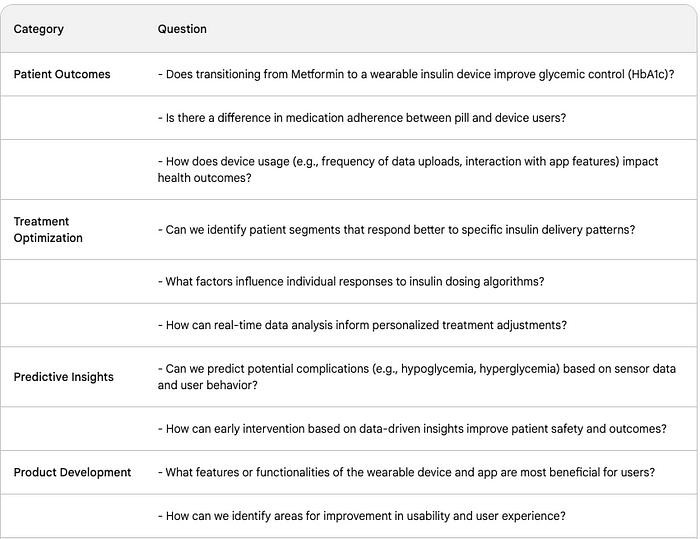 The Whys, Whats and Hows
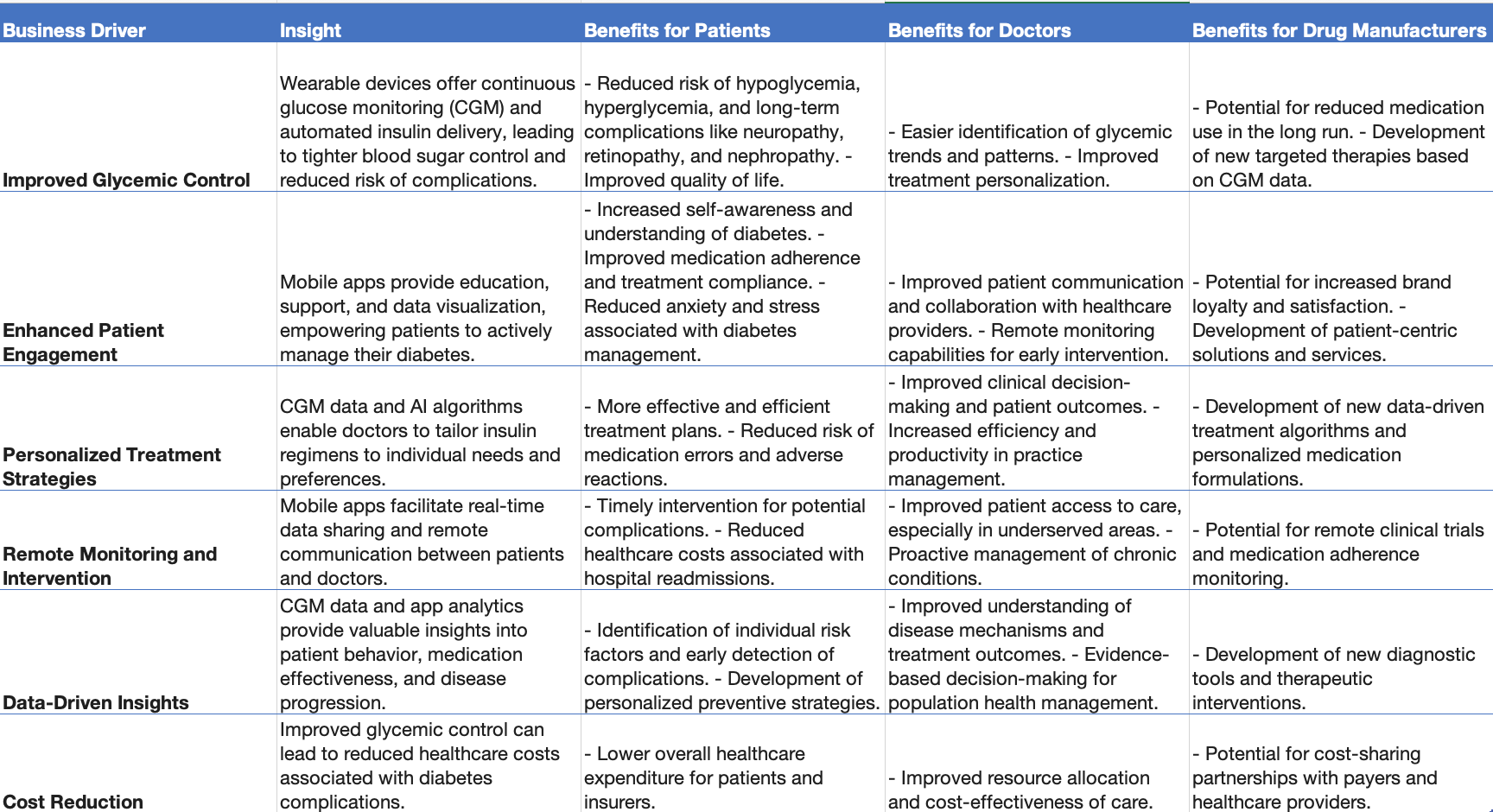 Business Drivers, Insights and Benefits
Understanding the Business Requirements/Process for Switching from Pills to Wearable Insulin Devices.
Here are the specific business needs and functionalities involved in a diabetic patient transitioning from metformin to a wearable insulin device. Here’s what to consider:
1. Patient Journey:
Initiation: What triggers the initial discussion about switching medications? (e.g., uncontrolled blood sugar levels, complications, patient preference)
Evaluation: How does the healthcare provider assess the patient’s suitability for a wearable insulin device? (e.g., medical history, lifestyle factors, tech literacy)
Device Selection: What factors influence the choice of a specific wearable insulin device? (e.g., insurance coverage, features, user-friendliness)
Training & Onboarding: How is the patient educated and trained on using the device and mobile app?
Monitoring & Adjustments: How are blood sugar levels monitored during the transition, and how are insulin doses adjusted?
Feedback & Support: What mechanisms are in place for continuous feedback and support from the healthcare provider?
2. Key Stakeholders:
Patients: What are their needs, concerns, and expectations throughout the transition?
Healthcare Providers: What are their responsibilities in managing the transition and patient follow-up?
Device Manufacturers: What information and support do they offer to patients and healthcare providers?
Insurance Companies: What are their coverage policies for wearable insulin devices and associated apps?
3. Business Functionalities:
Device-Patient Interaction: How does the patient interact with the device to deliver insulin doses?
Mobile App Integration: What functionalities does the app offer for monitoring, data visualization, and dose management?
Data Communication & Security: How is patient data securely collected, transmitted, and stored?
Alerts & Notifications: What alerts and notifications are generated for both patients and healthcare providers?
Reporting & Analytics: What reports and insights are available to track patient progress and improve care delivery?
4. Key Challenges:
Patient Adherence: How can patient engagement and adherence to the new treatment plan be ensured?
Data Interoperability: How can data from different devices and apps be seamlessly integrated and analyzed?
Privacy & Security: How can patient data be protected from unauthorized access and breaches?
Cost & Reimbursement: How can the affordability of wearable insulin devices and associated apps be addressed?
5. Success Metrics:
Improved blood sugar control
Reduced risk of complications
Increased patient satisfaction
Optimized healthcare provider workflow
That talks on:
Delve into the cutting-edge world of event streaming and cloud technology, the backbone of data collection and analysis in wearable insulin pumps.
Discover how Data Vault 2.0, a powerful data modeling approach, helps structure and manage the dynamic data generated by these devices.
Witness the transformation of raw data into actionable insights, paving the way for personalized insulin delivery and improved patient outcomes.